
Appetizers
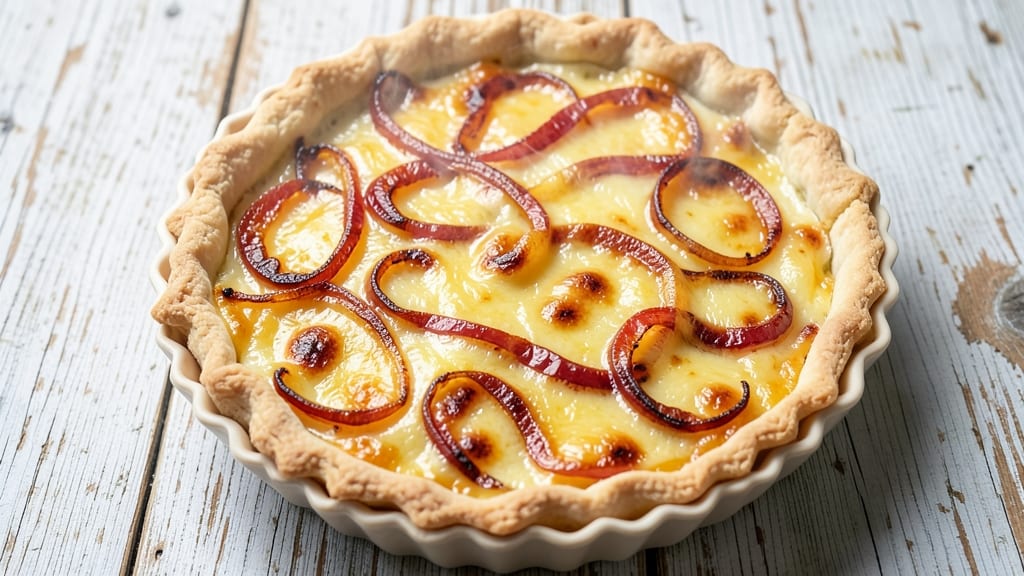
A basic cheese and onion quiche recipe delivers the perfect balance of savory, creamy, and flaky textures in every bite. The secret lies in a crisp, golden crust layered with tender onions and a rich egg custard that sets just right.
After years of perfecting this classic, I've learned the precise timing for caramelizing onions without burning them—creating that sweet, jammy depth that makes this quiche unforgettable.
This recipe builds on a simple foundation: a flaky pie crust, properly caramelized onions, and a well-balanced filling of eggs, cream, and sharp cheddar.
The key to success is patience—letting the onions cook low and slow until they're deep golden, then combining them with the egg mixture at the perfect temperature. Every component works together to create a quiche that's both comforting and impressive.
By the time it emerges from the oven, you'll have a quiche with a crisp, golden crust that shatters slightly when cut, layers of caramelized onions with their natural sweetness intensified, and a custard that's just set—creamy yet firm enough to slice neatly.
The cheese pulls into delicate strings, adding a satisfying texture contrast. This is the kind of dish that feels like a restaurant-quality meal, yet comes together with straightforward techniques.
Serve it warm with a simple green salad or crusty bread to soak up every last bit of custard. The leftovers reheat beautifully, making this an ideal recipe for meal prep. Let's get started on creating your perfect quiche—one that will become a staple in your rotation.
Ingredients for basic cheese and onion quiche
Six ingredients for the crust, six for the filling—twelve staples for a quiche that tastes like home.
| Ingredient | Amount | Notes |
|---|---|---|
| All-Purpose Flour 🌾 | 2 ½ cups | For pie crust, plus extra for dusting |
| Yellow Onions 🧅 | 2 whole | Thinly sliced for caramelizing |
| Unsalted Butter 🧈 | 1 cup | Cold, cubed for flaky crust |
| Ice Water 💧 | ½ cup | Chilled for pie crust |
| Large Eggs 🥚 | 4 whole | Room temperature for custard |
| Heavy Cream 🥛 | 1 cup | Full-fat for richness |
| Sharp Cheddar Cheese 🧀 | 1 ½ cups | Shredded, not pre-shredded |
| Salt 🧂 | 1 ½ tsp | Kosher or sea salt |
| Ground Black Pepper 🌶️ | ½ tsp | Freshly ground preferred |
| Garlic Powder 🧄 | ½ tsp | For depth of flavor |
| White Vinegar 🍶 | 1 tbsp | For pie crust binding |
| Granulated Sugar 🍚 | 1 tbsp | For caramelizing onions |
The onions are where magic happens. Sweet yellows work best—Vidalia if you're splurging, or any yellow from the grocery store. Slice them paper-thin (a mandoline makes this easy) and cook them low and slow until they're deep golden and jammy. Trader Joe's sells pre-sliced onions for lazy days, but fresh sliced is always better. The sugar helps caramelize them faster, but don't skip it entirely—just use less if you're watching sugar. I always make extra onions for sandwiches—they keep for 5 days in the fridge.
No sharp cheddar? Gruyère or Swiss will give you that creamy pull. Pre-shredded cheese has anti-caking agents that make it grainy—grate your own from a block. The crust needs cold butter and ice water to stay flaky. Shortcut tip: Pulse butter and flour in a food processor for 10 seconds to mimic cutting by hand. For the custard, room-temperature eggs blend smoother. If your eggs are straight from the fridge, let them sit out for 30 minutes first. The garlic powder is optional but adds a subtle depth that makes this quiche taste restaurant-quality.
This quiche reheats beautifully—350°F for 15 minutes until the edges are warm. Store leftovers in an airtight container for 4 days, or freeze for 2 months. I always bake an extra crust—freeze one for next week's quiche or savory tart. The filling can be prepped ahead and kept in the fridge for 24 hours before baking. Just don't blind-bake the crust too long or it'll get soggy when the filling goes in.
Why You'll Love This Recipe
- Foolproof Crust: I swear by this butter-and-flour crust—just mix, chill, roll. No fancy tools, no overworked dough. The key? Ice water keeps it from sticking while you handle it like a pro.
- Onion Love Bomb: That caramelized onion layer? Chef’s kiss. Sauté them low and slow until they’re sweet and jammy, then fold into the eggy center. It’s the kind of flavor that makes people pause mid-bite.
- Weeknight Workhorse: Breakfast for dinner? Brunch with friends? This quiche handles it all. Serve warm with toast or slice cold for sandwiches—no one ever turns it down.
- Budget Bright Spot: Eggs, flour, onions—all pantry staples that won’t break the bank. Plus, it reheats beautifully, so leftovers become tomorrow’s lunch without extra effort. Smart cooking, zero guilt.
Step-by-step instructions for basic cheese and onion quiche
Here's how to create a perfect quiche with layers of caramelized onions and a golden, flaky crust.
Prepare the Flaky Pie Crust
In a large bowl, combine the 2.5 cups all-purpose flour, 1.5 teaspoons salt, and 0.5 teaspoon garlic powder. Cut in the 1 cup unsalted butter using a pastry cutter or your fingers until the mixture resembles coarse crumbs with pea-sized butter pieces. This ensures the crust stays flaky rather than tough.
Add the 1 tablespoon white vinegar and 1 tablespoon granulated sugar, then sprinkle in the 0.5 cup ice water gradually while mixing with a fork. The dough should come together just enough to hold when pressed. Avoid overmixing—the gluten will develop and make the crust tough. Shape the dough into a disk, wrap in plastic, and chill for at least 1 hour to firm up.
Caramelize the Onions
Thinly slice the 2 whole yellow onions into even rounds—about 1/8-inch thick. Heat a large skillet over medium-low heat and add the onions with a pinch of salt. Cook for 20-25 minutes, stirring occasionally, until the onions turn deep golden brown and become tender. This slow process draws out their natural sweetness.
In the last 5 minutes of cooking, sprinkle the onions with 0.5 teaspoon ground black pepper and 0.5 teaspoon garlic powder to infuse their flavor. Remove from heat and let cool slightly—they’ll continue caramelizing as they sit. The onions should be soft enough to mash slightly with a fork when cool.
Assemble the Quiche Filling
Preheat the oven to 375°F. Roll out the chilled dough on a floured surface into a 12-inch circle (about 1/8-inch thick). Transfer it to a 9-inch pie dish, pressing gently to fit. Trim excess dough and crimp the edges with a fork. Prick the bottom with a fork to prevent bubbling.
In a bowl, whisk together the 4 whole large eggs, 1 cup heavy cream, and 1.5 cups sharp cheddar cheese until smooth. Fold in the cooled caramelized onions, ensuring even distribution. Pour the mixture into the crust, spreading it evenly. The filling should reach just below the crust’s edge.
Bake to Golden Perfection
Place the quiche on a baking sheet (to catch any drips) and bake for 40-45 minutes until the crust is deep golden brown and the filling is set but still slightly jiggly in the center. If the crust browns too quickly, tent it loosely with foil to prevent burning.
Remove from the oven and let rest for 10 minutes before slicing. This resting time allows the filling to firm up and the juices to redistribute, ensuring each bite is creamy and flavorful. Serve warm with a crisp green salad for a complete meal.
Pro Tips For Making Basic Cheese And Onion Quiche
- Preheat the Dish First: Pop your quiche dish (ceramic or metal) into a 375°F (190°C) oven for 5 minutes before adding the crust—this prevents a soggy bottom when the butter melts. I used to skip this and always ended up with a gummy crust, no matter how much flour I dusted the bottom with.
- Sweat the Onions Low: Cook the onions over medium-low heat until they’re translucent and just starting to soften—about 8-10 minutes. High heat caramelizes them too fast, making them bitter, and you’ll lose that sweet, mellow flavor the quiche needs. (Yes, even if you’re impatient like me.)
- Chill the Dough Before Rolling: Let the flour-butter dough rest in the fridge for at least 30 minutes before rolling it out—this keeps it from shrinking when it hits the hot pan. I learned this the hard way after wrestling with a dough that refused to stay put, no matter how much I floured the counter.
- Use Room-Temp Eggs: Take the eggs out of the fridge 30 minutes before whipping them—room temperature eggs blend smoother and create a lighter, more uniform custard. Cold eggs? You’ll end up with streaks of thick, unincorporated yolk, and that’s a textural nightmare in quiche. (Your future self will thank you.)
Essential equipment for this recipe
Pie Dish Essentials
Start with a 9-inch deep-dish pie plate—I use Corelle Stoneware for its even heat distribution and sturdy construction. Avoid glass that’s too thin, as it can crack under the weight of the filling.
For a budget-friendly option, Wilton pie pans work well and are dishwasher-safe. Always preheat your dish for 10 minutes before baking to ensure even cooking and prevent cracking. 🔥
Rolling Pin & Dough Tools
A French-style rolling pin with a smooth surface is ideal for rolling out your pie crust evenly. I recommend the OXO Good Grips—it’s lightweight yet sturdy, and the non-slip handles prevent it from sliding.
For shaping the dough, use a round pizza cutter or a sharp chef’s knife to trim excess dough cleanly. A pastry brush (like West Bend’s Silicone Pastry Brush) is also handy for brushing egg wash on the crust.
Skillet for Onions
Caramelizing onions requires a heavy-bottomed skillet to prevent burning. I use an All-Clad Stainless Steel 10-inch for its even heat distribution and durability. A non-stick skillet works too, but avoid cooking onions at high heat—medium-low is key to achieve that sweet, jammy texture.
A wooden spoon helps stir gently without scratching the pan. 🧅
Mixing & Measuring Tools
For the custard, a whisk (like Cuisinart’s Stainless Steel Whisk) ensures smooth blending of eggs and cream. Measure ingredients precisely with a stainless steel measuring cup set—avoid plastic, as it can retain odors.
A microplane is perfect for grating cheese fresh, and a fine-mesh sieve helps remove any clumps from the shredded cheddar. I also keep a kitchen scale handy for accurate measurements, especially when substituting ingredients.
Baking & Resting
Bake your quiche on a rimmed baking sheet to catch any drips—this prevents a messy oven. After baking, let it rest on a wire cooling rack for 10 minutes before slicing. This step is crucial for redistributing juices and achieving that perfect creamy texture.
For reheating leftovers, I use a combination of microwave and oven—350°F for 15 minutes restores the filling to its best state. ⏰
Nutrition facts
Frequently asked questions
Can I make this quiche without a pie crust?
For a crustless version, simply pour the egg mixture into a 9-inch oven-safe skillet (like cast iron) and bake at 350°F for 30-35 minutes. The onions will caramelize further during baking, creating a rich, jammy flavor. Brush the top with a little cream before baking for extra browning.
How do I prevent a soggy bottom in my quiche?
Prevent soggy crust by pre-baking the crust for 8-10 minutes at 375°F before adding the filling. Line it with parchment paper and add pie weights or dried beans to weigh it down. For extra insurance, chill the assembled quiche in the fridge for 30 minutes before baking to help the filling set faster.
What cheese can I substitute for sharp cheddar?
Gruyère adds nutty depth, while Swiss offers a mild sweetness. For extra creaminess, try fontina or havarti. Avoid pre-shredded cheese—the anti-caking agents make the filling grainy. If substituting, use the same amount by weight (1.5 cups shredded ≈ 6 ounces of block cheese).
Can I make this quiche ahead of time?
Yes! Assemble the quiche (without baking) and refrigerate for up to 24 hours. Bake straight from the fridge, adding 5-10 minutes to the baking time. For leftovers, store in an airtight container for 4 days or freeze for 2 months. Reheat slices at 350°F for 15 minutes to restore creaminess.
Why did my quiche turn out rubbery?
Overbaking causes rubbery texture. The filling should be just set with slight jiggle in the center when done. If your oven runs hot, reduce temperature to 350°F and check at 35 minutes. Also ensure your eggs and cream are at room temperature for proper custard formation.