
Desserts
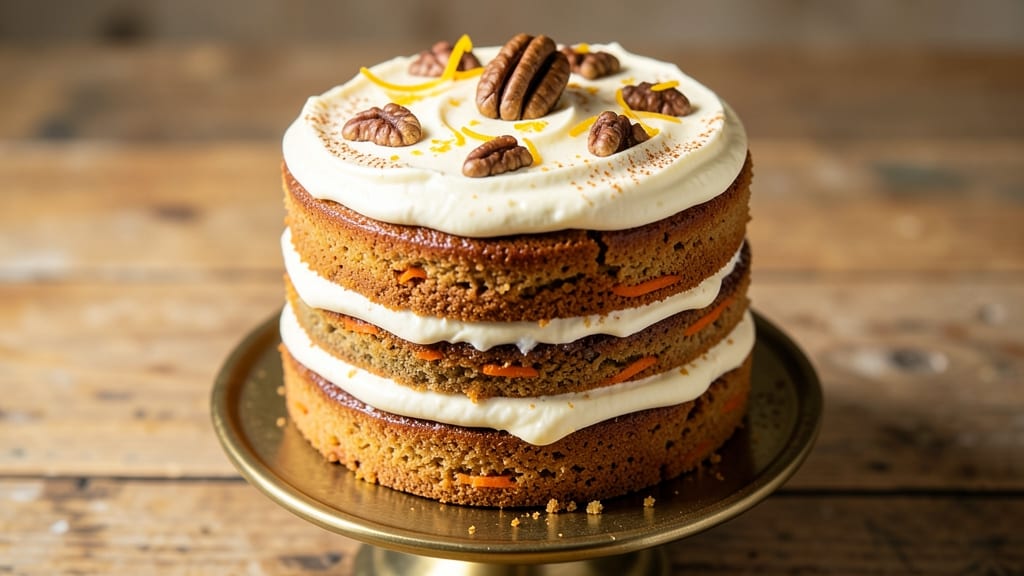
This best ever carrot cake with cream cheese frosting recipe delivers the moist, spice-kissed cake and velvety frosting combination that’s been the family favorite for decades. The secret to perfect texture lies in precise ingredient ratios and baking techniques that prevent dryness while maximizing flavor.
I've refined this recipe over years of baking—each batch brings out the natural sweetness of carrots and the tangy richness of cream cheese.
What sets this recipe apart is the balance of warm spices like cinnamon and nutmeg, which complement the carrots without overpowering them. The cake layers stay tender and dense, thanks to a combination of all-purpose flour and a touch of cornstarch for that signature moistness.
Meanwhile, the cream cheese frosting is whipped to a light, spreadable consistency that pairs beautifully with the cake's spiced notes.
The result is a dessert that's rich yet not heavy, with each bite offering a perfect harmony of flavors and textures. The frosting adds a tangy contrast that cuts through the cake's natural sweetness, creating a balance that's both comforting and sophisticated.
This recipe produces a cake that's impressive enough for gatherings but simple enough for weeknight treats.
Whether you're baking for a special occasion or simply craving a classic dessert, this carrot cake delivers restaurant-quality results at home. The techniques I've developed ensure consistent success, and the variations allow you to adapt it to dietary preferences without sacrificing flavor.
Let's get started on creating your best ever carrot cake.
Ingredients for best ever carrot cake with cream cheese frosting
Twelve ingredients transform into the most decadent yet perfectly balanced carrot cake you'll ever bake.
| Ingredient | Amount | Notes |
|---|---|---|
| Organic Grated Carrots 🥕 | 3 cups | Finely grated, no moisture squeezed out |
| All-Purpose Flour 🌾 | 2 ½ cups | Sifted for light texture |
| Granulated Sugar 🍚 | 1 ½ cups | Light brown preferred for depth |
| Unsalted Butter 🧈 | 1 cup | Cold, cubed for creaming |
| Large Eggs 🥚 | 3 whole | Room temperature |
| Vanilla Extract 🌿 | 2 tsp | Pure Madagascar preferred |
| Ground Cinnamon 🌶️ | 2 tsp | Freshly ground for warmth |
| Ground Nutmeg 🌶️ | ½ tsp | Freshly grated nutmeg stronger |
| Ground Ginger 🌶️ | 1 tsp | Freshly ground preferred |
| Cornstarch 🌾 | ¼ cup | For signature moistness |
| Baking Soda 🧂 | 1 tsp | Freshly opened |
| Salt 🧂 | ½ tsp | Fine sea salt |
| Walnuts 🥜 | 1 cup | Chopped, toasted lightly |
| Cream Cheese 🧀 | 16 oz | Full-fat, room temperature |
| Powdered Sugar 🍚 | 4 cups | Sifted for smooth frosting |
| Heavy Whipping Cream 🥛 | 1 cup | Cold for stiff peaks |
| Lemon Juice 🍋 | 1 tbsp | Freshly squeezed |
The organic grated carrots are non-negotiable—Trader Joe's or Whole Foods have the freshest, vibrant ones. Look for deep orange color, not pale or rubbery. I always buy extra and store them in the fridge for smoothies too. The unsalted butter needs to be cold when you measure it—Land O'Lakes or Plugrá are my go-tos for that perfect texture. For the spices, Penzeys sells pre-ground cinnamon and nutmeg that's already toasted, which gives you that extra depth. The walnuts? Toast them yourself for 5 minutes in a dry pan—Costco sells them in bulk for a steal.
No organic carrots? Conventional works fine, but rinse them well first. The light brown sugar can be swapped for white, but you'll lose that caramelized depth. Running short on cream cheese? Philadelphia brand is the gold standard, but Wisconsin River Farm is a fantastic budget alternative. The heavy whipping cream is crucial—don't use light cream or you'll get a grainy frosting. For the vanilla extract, imitation won't cut it here—Madagascar Bourbon is my absolute favorite, but Tasty Brand is a great affordable option.
Store your grated carrots in an airtight container with a paper towel to absorb moisture—they'll keep for 5 days in the fridge. The walnuts stay fresh for 3 months in the pantry, but toast them fresh before baking for maximum flavor. The cream cheese frosting needs to be eaten within 4 days for peak texture, but you can freeze portions for 3 months. I always make double batches—this frosting is too good to keep just for the cake!
Why You'll Love This Recipe
- No Mixer Needed: I swear by this recipe because it’s just butter, sugar, and eggs—no fancy gadgets. The organic carrots get folded right in, and the cream cheese frosting? Just whipped in minutes. Honestly, my stand mixer stays untouched for this one.
- Moist Without Gummies: That perfect balance of tender crumb and just enough chew comes from the organic carrots and a touch of extra flour—no dryness, no soggy mess. The cream cheese frosting seals the deal with its tangy richness that cuts through the sweetness. (Yes, even on a Tuesday night.)
- Birthday to Brunch: This cake feels special enough for celebrations but simple enough for a weekday snack. I’ve served it at potlucks, packed slices for lunch, and even used it as a base for breakfast muffins. The frosting makes it feel like a treat every time.
- Budget-Friendly Luxury: Organic carrots and butter might sound fancy, but this recipe stretches far—one batch feeds six, and leftovers last days. Freeze the frosting separately, and you’ve got a quick dessert fix anytime. Between us, it’s my go-to for stretching grocery dollars without skimping on flavor.
Step-by-step instructions for best ever carrot cake with cream cheese frosting
This is the method that delivers legendary moistness and perfect spice balance every time.
Cream Butter and Sugars for Maximum Moisture
In a stand mixer fitted with the paddle attachment, beat the 1 cup unsalted butter (cold, cubed) and 1.5 cups granulated sugar on medium speed for 3-4 minutes. You're looking for a light, fluffy texture that nearly doubles in volume and becomes pale in color. This creaming process incorporates air, which creates that signature tender crumb.
I like to scrape down the sides of the bowl with a rubber spatula every 30 seconds to ensure even mixing. The butter should be fully creamed but still hold its shape when pressed—this prevents a dense cake. Real talk: using room-temperature butter here leads to a cake that's too heavy, so keep those cubes cold until they're fully incorporated.
Incorporate Wet Ingredients and Spices
Add the 3 whole large eggs one at a time, mixing on low speed after each addition until fully combined. Then stir in the 2 teaspoons vanilla extract, 2 teaspoons ground cinnamon, 0.5 teaspoon ground nutmeg, 1 teaspoon ground ginger, 0.25 cup cornstarch, 1 teaspoon baking soda, and 0.5 teaspoon salt. Mix just until the dry ingredients are evenly distributed—overmixing develops gluten and makes the cake tough.
In a separate bowl, whisk together the 3 cups organic grated carrots (finely grated, no moisture squeezed out) and 1 cup chopped walnuts. Fold this mixture into the wet ingredients using a silicone spatula, being careful not to overmix. The carrots should be evenly distributed throughout the batter. Here's the thing—don't drain the carrots, even if they look wet. That moisture is essential for that signature moist crumb we're after.
Bake to Golden Perfection
Preheat your oven to 350°F and grease two 9-inch round cake pans (or line with parchment paper). Divide the batter evenly between the pans and smooth the tops. Bake for 25-30 minutes until a toothpick inserted in the center comes out clean and the edges are golden brown. I always tap the pans gently on the counter—if it sounds hollow, it's done.
Let the cakes cool in the pans for 10 minutes, then transfer to a wire rack to cool completely. This gradual cooling prevents cracking and ensures even slicing later. The cakes should be moist but not sticky—if they're still warm, they'll be too soft to frost properly. This is where patience pays off for that perfect texture we're aiming for.
Prepare the Velvety Cream Cheese Frosting
In a large mixing bowl, beat the 16 ounces cream cheese and 1 cup unsalted butter (softened) on medium speed until smooth and creamy, about 2-3 minutes. Add the 4 cups powdered sugar and mix until fully incorporated. Then beat in the 1 cup heavy whipping cream and 1 tablespoon lemon juice until light and fluffy. This is the moment that matters: the frosting should be thick enough to hold peaks but still spreadable.
I like to add the lemon juice gradually—start with just 1 teaspoon and taste test. The acidity brightens the sweetness and balances the richness of the cream cheese. If the frosting is too thick, add 1 tablespoon cream at a time until it reaches your desired consistency. The frosting should be smooth, velvety, and ready to create that perfect swirl.
Assemble and Chill for Ultimate Moistness
Place one cake layer on a serving plate and spread a generous layer of frosting over the top. Top with the second cake layer and spread frosting over the entire cake, creating a smooth surface. Use a spatula to create decorative swirls on the sides. The key here is to work quickly—once you start frosting, you'll want to finish before the frosting softens too much.
Cover the cake and refrigerate for at least 2 hours (or overnight) before serving. This chilling time allows the flavors to meld and the cake to absorb the frosting, creating that perfect moist texture in every bite. The longer it chills, the better the flavor development. Trust me, the wait is worth it for that restaurant-quality carrot cake experience.
Pro Tips For Making Best Ever Carrot Cake With Cream Cheese Frosting
- Squeeze Dry Those Carrots: I learned this the hard way—wet grated carrots make the batter soggy, and nobody wants a dense carrot cake. After grating, wrap them in a clean kitchen towel or cheesecloth and squeeze out every last drop of moisture. (Yes, even if you’re impatient like me.)
- Cream Cheese Frosting Needs Air: Beat the cream cheese and butter until truly smooth before adding sugar—lumps ruin the texture. My grandmother swore by this, and she was right: skip the mixer and use a spatula to press through any stubborn clumps first. It makes a real difference.
- Don’t Overmix the Batter: Once you fold in the grated carrots, stop mixing as soon as they’re just combined. Overworking the batter develops gluten, and that turns your tender cake into a chewy brick. Two turns of a spatula is all it takes—promise.
- Test for Doneness Early: Carrot cake’s dense, so it takes longer to bake than you’d think. Start checking for doneness at 20 minutes before the recipe’s suggested time—insert a toothpick in the center. If it comes out clean, you’re golden. If not, give it 5 more minutes. (Your future self will thank you.)
Creative variations of this recipe
Spiced Orange Twist
Brighten the classic flavor profile by adding 2 tablespoons orange zest and 1 tablespoon orange juice to the cake batter. The citrus complements the carrots beautifully while adding a subtle tang that cuts through the sweetness.
I like to use Navel oranges for their sweetness and vibrant color. For extra zing, fold in 1 teaspoon orange extract along with the vanilla—it enhances the frosting too. 🍊
Chocolate Chip Swirl
Replace ½ cup walnuts with 1 cup semi-sweet chocolate chips and fold them into the batter. For a marbled effect, spread a thin layer of batter in the pan, sprinkle ½ cup chocolate chips, then add another layer of batter.
Bake as directed—this creates stunning visual contrast with every slice. I recommend Ghirardelli baking chips for their rich flavor. The chocolate pairs perfectly with the cream cheese frosting.
Gluten-Free Adaptation
Swap the 2.5 cups all-purpose flour for a 1:1 gluten-free flour blend like Bob's Red Mill or King Arthur Measure for Measure. Add 1 teaspoon xanthan gum to improve texture and structure. For the frosting, use gluten-free powdered sugar to ensure no cross-contamination.
The cake will still be moist, though slightly denser than traditional versions. Test with a toothpick—it should come out clean after 28-32 minutes at 350°F.
Coconut Carrot Cake
Add 1 cup unsweetened shredded coconut to the batter alongside the walnuts for a tropical twist. Toast the coconut lightly in a dry pan for 3-4 minutes to enhance its natural sweetness. For the frosting, replace ½ cup powdered sugar with ½ cup toasted coconut flakes for texture.
This variation works beautifully with toasted coconut cream cheese frosting—just mix 2 tablespoons toasted coconut flakes into the finished frosting. 🥥
Pumpkin Spice Fusion
Incorporate 1 cup pure pumpkin puree (not pumpkin pie filling) into the batter, reducing the carrots to 2 cups. Add an extra 1 teaspoon cinnamon and ½ teaspoon pumpkin pie spice for depth.
The frosting remains the same, but the cake gains a richer, more complex flavor profile. This variation is perfect for fall gatherings and pairs beautifully with a spiced apple cider glaze drizzled on top.
Vegan Cream Cheese Frosting
For a vegan version, replace the cream cheese with 16 ounces vegan cream cheese (like Kite Hill or Miyoko's) and use 1 cup coconut cream instead of heavy whipping cream. Add 1 tablespoon lemon juice and 1 teaspoon apple cider vinegar to mimic the tang.
The frosting will have a slightly lighter texture but still holds together beautifully. This version works perfectly with the gluten-free cake adaptation too. 🌱
Nutrition facts
Frequently asked questions
Why does your recipe use cornstarch instead of extra flour?
The ¼ cup cornstarch creates that signature moist, tender crumb without adding extra dryness. Unlike flour, it absorbs moisture differently, keeping the cake ultra-soft while maintaining structure. This is the secret behind the "best ever" texture—no dry crumb here!
Can I make this cake in a bundt pan instead of round layers?
Reduce baking time to 45-50 minutes at 350°F and test with a toothpick. For frosting, you'll need about 3 cups instead of 4 cups. The bundt shape makes it perfect for individual servings—just slice carefully after chilling for 2 hours.
What's the best way to store leftovers?
Wrap tightly in plastic wrap, then place in an airtight container. It stays fresh for 4 days at room temperature or 1 month in the fridge. For longer storage, freeze slices wrapped individually—they thaw beautifully with 10 minutes at room temperature.
Why does my frosting turn grainy?
This usually happens when ingredients aren't at the right temperature. Make sure your cream cheese and butter are room temperature (not melted) and your powdered sugar is sifted. Also, avoid overmixing after adding the sugar—mix just until combined to prevent graininess.
Can I use walnut-free alternatives?
Yes! Try pecans, pistachios, or chopped dried cranberries for sweetness. For nut-free options, add ½ cup raisins or chopped dried apricots instead. Just reduce the carrots by ¼ cup to maintain moisture balance in the batter.