
Appetizers
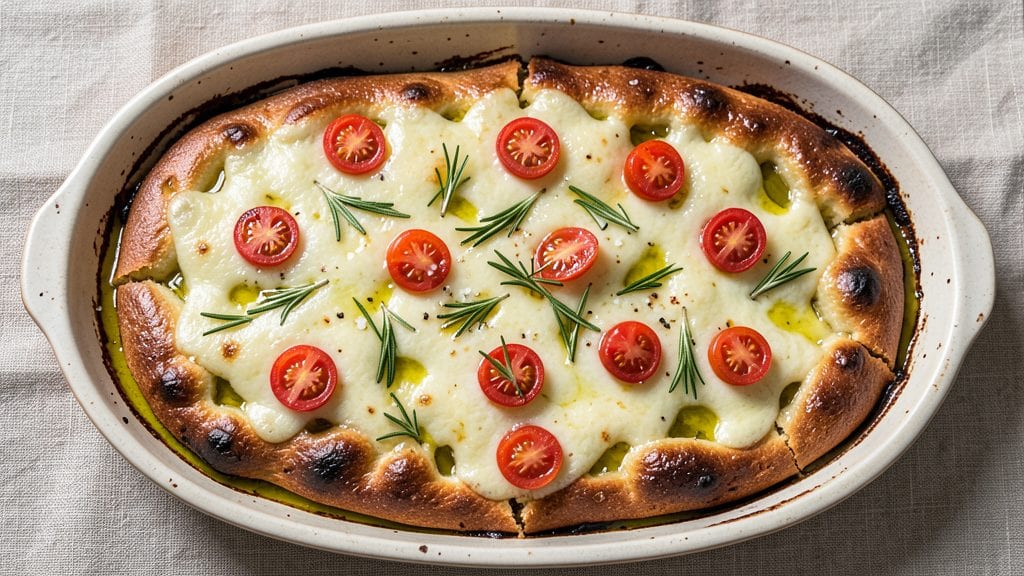
This cheese focaccia recipe transforms simple ingredients into a golden, airy loaf with a crisp crust and pockets of melted cheese—perfect for appetizers or a satisfying snack. The secret lies in the olive oil dimpling technique, which creates that signature dimpled texture while keeping the interior tender.
I’ve perfected this version over years of baking, balancing traditional methods with modern flavor twists.
What makes this recipe stand out is the combination of high-quality olive oil and herbed cheese—rosemary, garlic, and parmesan infuse every bite with aromatic depth. The dough proofing is the key to achieving that light, airy texture, while the cheese topping melts into gooey pockets during baking.
It’s a foolproof method that delivers restaurant-quality results at home.
By the time it emerges from the oven, you’ll have a crispy, golden crust with soft, pillowy centers and pockets of melted cheese that pull apart effortlessly. This focaccia pairs beautifully with soups, salads, or simply as a standalone treat. The aroma alone will have everyone gathered around your kitchen.
The best part? This recipe scales effortlessly—whether you’re feeding a crowd or just craving a slice. Once you try this version, you’ll never settle for store-bought again. Let’s get started on creating your perfect loaf.
Ingredients for cheese focaccia
Golden crust, gooey cheese pockets—this focaccia needs just 12 simple ingredients for restaurant-quality magic.
| Ingredient | Amount | Notes |
|---|---|---|
| Active Dry Yeast 🍞 | ¼ tsp | Instant yeast works too |
| Warm Water 💧 | 1 cup | 110°F, not hot |
| All-Purpose Flour 🌾 | 4 cups | King Arthur preferred |
| Extra-Virgin Olive Oil 🫒 | ¾ cup | High-quality, fruity kind |
| Granulated Sugar 🍚 | 1 tbsp | Feeds the yeast |
| Diamond Crystal Kosher Salt 🧂 | 2 tsp | Fine grain preferred |
| Shredded Mozzarella Cheese 🧀 | 2 cups | Freshly shredded, low-moisture |
| Parmesan Cheese 🧀 | ½ cup | Freshly grated from block |
| Fresh Rosemary 🌿 | ¼ cup | Finely chopped, stems removed |
| Garlic Cloves 🧄 | 4 cloves | Minced, for dough and topping |
| Flaky Sea Salt 🧂 | 2 tbsp | For finishing crust |
| Cornmeal 🌽 | ¼ cup | For dusting baking sheet |
The olive oil here isn’t just any oil—high-quality extra-virgin (think California Olive Ranch or Bertolli) makes all the difference. It’s the star of the show, both in the dough and that signature drizzle. Freshly grated Parmesan and low-moisture mozzarella (shred it yourself—pre-shredded gets gummy) create those irresistible pockets. For the rosemary, grab the dried variety from Penzeys if you’re short on time, but fresh has that vibrant punch. The yeast? King Arthur’s active dry is my go-to—it’s reliable and affordable. Store flour and yeast in airtight containers away from heat to keep them fresh.
No mozzarella? Fontina or Gruyère melt beautifully—just shred them yourself. Swap the rosemary for thyme or oregano if that’s what you’ve got, but rosemary’s that piney aroma is signature. Running low on olive oil? Avocado oil works in a pinch, but it lacks that fruity depth. The garlic can be roasted for a sweeter flavor—just toss whole cloves with a drizzle of olive oil and roast at 400°F for 10 minutes before mincing. For the cheese topping, mix in a dash of black pepper if you’re feeling adventurous—it adds a nice kick. And if you’re baking for a crowd, double the cheese topping—trust me, it disappears fast.
This dough is a two-rise wonder, so plan ahead—it needs time to develop that airy texture. After the first rise, cover the bowl with a damp towel and let it sit in a warm spot (like your oven with the light on) for 1-2 hours until puffy. Once shaped and topped, let the focaccia rise again for 30-45 minutes before baking. The cheese topping should be sprinkled just before baking so it melts into those perfect pockets. Store leftovers wrapped in foil at room temperature for 2 days, or freeze for up to 3 months. Reheat in a 350°F oven for 5-10 minutes to restore that crispy crust.
Why You'll Love This Recipe
- No-Knead Magic: I swear by this dough—just mix the yeast, warm water, and flour, then let it rise while I sip coffee. No standing at the counter, no aching arms, just hands-off magic.
- Cheese Pulls Hard: That stretchy, gooey cheese in every bite? It’s the olive oil and flour playing nice with whatever cheese you toss in—mozzarella, parm, even a little feta. The crust gets crispy, but the inside? Still pillowy.
- Weeknight Superstar: I make a batch on Sunday, pop it in the fridge, and pull it out for lunch all week. Toast slices with jam for breakfast, or serve it with soup when the kids come home hungry. It’s my lazy-day hero.
- Budget Stretch: A single batch feeds four for dinner and still leaves me snacks for days. The yeast and flour cost pennies, and the olive oil makes everything taste fancy. My wallet and my taste buds win.
Step-by-step instructions for cheese focaccia with herbed crust
Here's the method that transforms simple ingredients into restaurant-worthy focaccia with irresistible texture and flavor.
Activate the Yeast and Mix the Dough
In a large bowl, combine the 1 cup warm water (around 110°F) with 1 tablespoon granulated sugar and 0.25 teaspoon active dry yeast. Let it sit for 5-7 minutes until frothy—this confirms your yeast is alive and ready to work. If it doesn't bubble, start over with fresh yeast.
Add the 4 cups all-purpose flour and 2 teaspoons diamond crystal kosher salt, then mix with a wooden spoon until a shaggy dough forms. Slowly drizzle in the 0.75 cup extra-virgin olive oil while stirring. The dough will come together when it pulls away from the sides of the bowl and forms a cohesive mass. If it's too sticky, add 1 tablespoon flour at a time until it's just manageable—this dough should be soft but not wet.
Knead and Let the Dough Rise
Turn the dough onto a lightly floured surface and knead for 5-7 minutes until smooth and elastic. You'll know it's ready when it springs back slowly when poked. For easier handling, I like to use a dough scraper to help fold and turn the dough without losing any flour.
Place the dough in a lightly oiled bowl, cover with plastic wrap, and let it rise in a warm place for 1-2 hours or until doubled in size. The kitchen counter near the oven works perfectly—just turn the oven to 200°F for 5 minutes to warm it up. Poke the dough gently; if it springs back slowly, it's ready for shaping.
Shape and Prepare the Dough for Baking
Grease a 9x13-inch baking pan generously with olive oil, then dust the bottom with 0.25 cup cornmeal. Transfer the risen dough to the pan and gently press it out to fit the dimensions, using your fingers to create dimples all over the surface. This step is crucial—it gives that classic focaccia texture.
Cover the pan with a clean kitchen towel and let the dough rise again for 30-45 minutes until it puffs up noticeably. Preheat your oven to 425°F while the dough rises. This high temperature ensures a crispy crust and perfectly melted cheese.
Add Cheese and Herbs for Maximum Flavor
Once the dough has risen, sprinkle 2 cups shredded mozzarella cheese evenly over the surface, pressing it gently into the dimples. Then, distribute the 0.5 cup freshly grated parmesan cheese and 0.25 cup finely chopped fresh rosemary over the top. The cheese should melt beautifully, creating a gooey, golden crust.
Drizzle generously with more extra-virgin olive oil—this is where the magic happens. Use about 2-3 tablespoons, letting it pool in the dimples. Sprinkle 2 tablespoons flaky sea salt evenly over the top, and press the 4 minced garlic cloves into the surface. The aroma alone will make your kitchen smell incredible.
Bake to Golden Perfection
Bake the focaccia in the preheated 425°F oven for 20-25 minutes until the top is deep golden brown and the cheese is bubbling. The edges should be crispy, and the crust should pull away slightly from the pan. If it browns too quickly, tent loosely with foil to prevent over-browning.
Remove from the oven and let it cool for 5 minutes before slicing. The focaccia will be soft and pillowy inside with a crispy, cheesy exterior. Serve warm with a drizzle of extra-virgin olive oil and a sprinkle of flaky sea salt. Each bite delivers the perfect balance of herbed, cheesy goodness with that signature focaccia texture.
Pro Tips For Making Cheese Focaccia
- Test Yeast First: Mix the yeast, warm water, and sugar in a small bowl, then wait 5–10 minutes. If it doesn’t foam, your yeast is dead—start over. I learned this the hard way after baking a flat, sad focaccia that tasted like cardboard.
- Oil the Pan Twice: Brush the baking tray with olive oil before shaping the dough, then again right before baking. The second coat guarantees a crisp crust, not a sticky mess. (Yes, even if you’re impatient like me.)
- Skip the Over-Kneading: Stop mixing as soon as the dough pulls away from the bowl—overworking it makes focaccia dense. My grandmother swore by this, and she was right: the right texture is stretchy, not tough.
- Preheat with a Pan: Place the empty baking tray in the oven while preheating. The dough hits a hot surface immediately, which locks in moisture and gives that signature blistered crust. Sounds weird, but it works—every single time.
Wine and beer pairings for this cheese focaccia
Italian White Wines
For this rich, herbed cheese focaccia, I always reach for a crisp Vermentino from Sardinia or a zesty Pinot Grigio from Alto Adige. The bright acidity and citrus notes cut through the olive oil richness while complementing the rosemary and garlic.
A Soave Classico from Veneto also works beautifully—its almond and pear flavors harmonize perfectly with the melted mozzarella. 🍷
Crisp Italian Beers
A chilled Peroni or Moretti lager provides the perfect light contrast to the cheesy, herby focaccia. The subtle bitterness and effervescence cleanse your palate between bites.
For craft beer lovers, try a Belgian witbier like Stella Artois Wit—its coriander and orange peel notes mirror the rosemary and garlic in the focaccia. Avoid heavy stouts or IPAs that would overpower the delicate flavors. 🍺
Bold Red Wine Option
If you prefer red, a medium-bodied Chianti Classico with its bright acidity and cherry notes stands up to the focaccia’s richness. Look for a Sangiovese with 12-14% alcohol—it’s light enough to not overwhelm the dish while adding depth.
The tannins in the wine will also pair well with the melted cheese. 🍷
Sparkling Pairings
For a celebratory touch, a Prosecco or Franciacorta from Italy brings effervescence that mirrors the focaccia’s airy texture. The slight sweetness in Prosecco balances the saltiness of the flaky sea salt topping. Even a dry sparkling wine like La Marca Prosecco works beautifully—just chill it thoroughly before serving. ✨
Non-Alcoholic Options
Don’t drink alcohol? A sparkling San Pellegrino Aranciata or Sanbitter provides the same refreshing contrast without the boozy notes. For something more substantial, try a blood orange soda—its citrusy sweetness complements the rosemary and garlic beautifully. 💫
Nutrition facts
Frequently asked questions
Can I make this cheese focaccia without yeast?
No, yeast is essential for the signature airy texture. However, you could try a quick-poche version using baking powder (1.5 teaspoons) instead of yeast, but the result will be denser and lack the same depth of flavor. For a gluten-free option, use a 1:1 gluten-free flour blend and add 1 extra teaspoon of xanthan gum to the dough.
Why did my focaccia turn out dense instead of light and airy?
Dense focaccia usually means the dough didn't rise properly. Check these common issues: yeast was expired or too old, water wasn't warm enough (110°F), or the dough didn't have enough time to proof (1-2 hours minimum). Also, over-kneading or using too much flour can weigh it down. For next time, let the dough rise in a warm spot and avoid punching it down after the first rise.
How do I store leftover cheese focaccia?
Wrap cooled focaccia tightly in plastic wrap or foil and store at room temperature for 2 days—it stays fresh longer than most bread. For longer storage, freeze slices in a sealed bag for up to 3 months. To revive, reheat in a 350°F oven for 5-10 minutes until crispy again. Never store it in the fridge—it dries out too quickly.
Can I make this focaccia in a smaller pan?
Yes, but the texture will differ slightly. For a 9-inch round pan, reduce the recipe by about 30% and bake at 400°F for 18-20 minutes. The crust will be thicker, and the cheese pockets may be less pronounced. If using a loaf pan, shape the dough into a rectangle and reduce the cheese topping by 25% to avoid overflow.
What other cheeses can I use besides mozzarella and parmesan?
For melting, try fontina, Gruyère, or provolone—they create rich, gooey pockets. For a sharper flavor, swap parmesan with pecorino romano or aged asiago. Avoid pre-shredded cheese (it contains anti-caking agents that prevent proper melting). For a vegetarian twist, add vegan mozzarella and nutritional yeast for a cheesy depth.