
Desserts
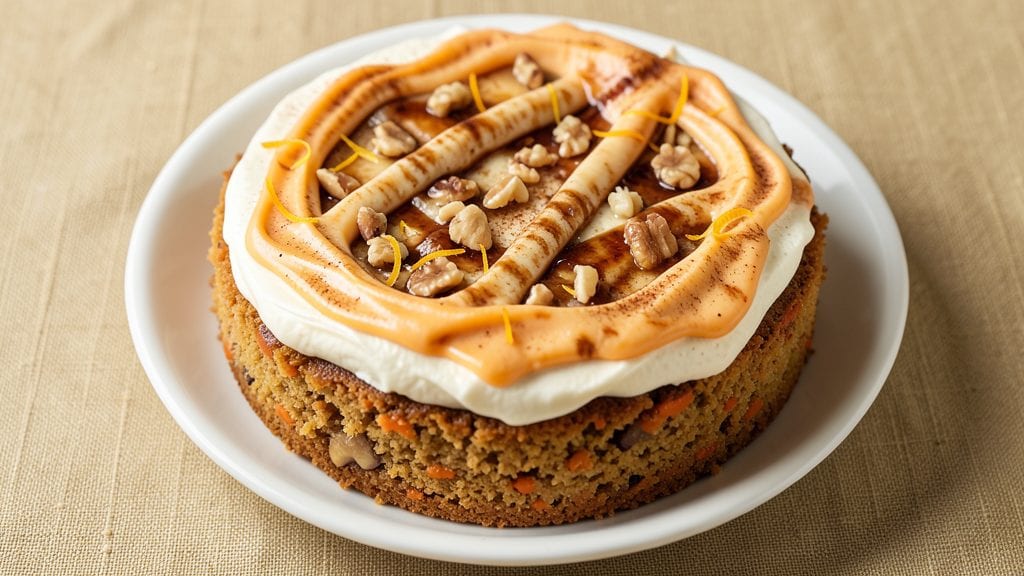
This Cheesecake Factory carrot cake cheesecake recipe delivers the perfect marriage of moist spiced carrot cake layers and velvety cheesecake filling—all baked in one pan for restaurant-quality results.
The secret lies in a precisely balanced crust with warm cinnamon and nutmeg, paired with a creamy cheesecake layer that swirls together seamlessly. I’ve perfected this technique after testing countless variations, ensuring each bite offers the best of both desserts without the fuss of layering separately.
The recipe begins with a spiced carrot cake base that’s rich yet tender, thanks to a precise blend of warm spices and a touch of orange zest for brightness. While it bakes, the cheesecake layer develops a smooth, jiggly texture that contrasts beautifully with the cake’s moist crumb.
The key to success is patience—allowing the cake to cool gradually before assembling ensures clean, professional-looking layers that hold together perfectly.
What you’ll end up with is a showstopping dessert that’s creamy in every bite, with the signature carrot cake flavors woven throughout. The top can be finished with a dusting of powdered sugar or a drizzle of cream cheese frosting for that final restaurant touch.
This recipe is designed for those who love indulgent desserts but want to recreate the magic of The Cheesecake Factory at home.
Whether you’re serving it at a holiday gathering or treating yourself to a special dessert, this carrot cake cheesecake delivers the same level of satisfaction as the original—just with a homemade twist. Let’s get baking!
Ingredients for cheesecake factory carrot cake cheese cake
Eighteen ingredients blend into two decadent layers—spiced carrot cake and velvety cheesecake—all in one pan.
| Ingredient | Amount | Notes |
|---|---|---|
| All-Purpose Flour 🌾 | 2 cups | Sifted for light texture |
| Granulated Sugar 🍚 | 1 ½ cups | White or light brown |
| Light Brown Sugar 🍚 | ½ cup | Packed firmly |
| Ground Cinnamon 🌿 | 2 tsp | Freshly ground preferred |
| Ground Nutmeg 🌿 | ½ tsp | Freshly grated nutmeg |
| Ground Ginger 🌿 | 1 tsp | No clumps |
| Baking Soda 🧪 | 1 tsp | Pure baking soda |
| Salt 🧂 | ½ tsp | Fine sea salt |
| Vegetable Oil 🫒 | ½ cup | Light, neutral flavor |
| Unsalted Butter 🧈 | ½ cup | Softened, full-fat |
| Large Eggs 🥚 | 4 whole | Room temperature |
| Vanilla Extract 🥛 | 1 tbsp | Pure vanilla |
| Orange Zest 🍊 | 1 tbsp | Freshly grated |
| Grated Carrots 🥕 | 2 cups | Finely grated, packed |
| Raisins 🍇 | ½ cup | Chopped if large |
| Cream Cheese 🧀 | 16 oz | Full-fat, room temp |
| Sour Cream 🥛 | ½ cup | Full-fat preferred |
| Powdered Sugar 🍚 | ½ cup | For final dusting |
The cream cheese is the foundation of this recipe—Philadelphia brand is reliable, but any full-fat block-style works if you pulse it in a food processor. For the carrot cake layer, freshly grated carrots (not baby carrots) yield the best texture. I grab mine from the produce section at Whole Foods or Trader Joe's—they have the most vibrant, firm carrots. The spices matter too: Penzeys or McCormick ground spices stay potent longer than store-brand options. If you're using dried orange zest, toast it briefly in a dry pan to deepen the flavor.
No fresh carrots? Canned pumpkin puree at half the amount works in a pinch, though the texture will differ slightly. Substituting raisins for chopped dates or dried cranberries adds chewiness. For the cheesecake layer, Greek yogurt at half the sour cream makes it lighter. The vanilla extract can be swapped for 1 tsp vanilla bean paste if you're feeling fancy. All-purpose flour is standard, but King Arthur or Bob's Red Mill brands sift more evenly. The baking soda and salt are non-negotiable—measure carefully to avoid bitterness.
This dessert keeps beautifully—3 days refrigerated or 2 months frozen. For freezing, wrap tightly in plastic wrap and foil. Thaw overnight in the fridge before serving. The carrot cake layer can be baked separately and stored for 2 days before adding the cheesecake mixture. For presentation, dust with powdered sugar just before serving—it melts into a beautiful sheen. Portion into individual slices with a serrated knife for clean cuts.
Why You'll Love This Recipe
- No Mixing Madness: I swear by this recipe because it’s basically a "dump and bake" with a few swirls—no food processor, no overmixing. The flour, brown sugar, and cinnamon blend into a tender crumb that’s foolproof, even when I’m distracted.
- Spiced to Perfection: That warm nutmeg and cinnamon combo? It’s like autumn in every bite. The brown sugar caramelizes just enough to give it a subtle depth, while the cream cheese keeps it rich without being heavy—trust me, it’s the kind of flavor that lingers.
- Party in a Box: Serve it at brunch with a dollop of whipped cream, slice it for a potluck, or pack it for a picnic. The texture holds up beautifully, and honestly? It’s the one dessert that never feels like too much effort for a crowd.
- Budget-Friendly Luxury: Uses pantry staples—no specialty ingredients, no pricey add-ins. A single batch stretches for leftovers, and I’ve reheated slices in the oven for days without losing that moist, spiced magic. (Yes, even on a Tuesday night.)
Step-by-step instructions for cheesecake factory carrot cake cheesecake
This one-pan wonder combines the best of both desserts for a rich, spiced carrot cake base and velvety cheesecake filling.
Prepare the Carrot Cake Base
Preheat your oven to 350°F and grease a 9-inch springform pan thoroughly with vegetable oil. In a large mixing bowl, combine the 2 cups all-purpose flour, 1.5 cups granulated sugar, 0.5 cup light brown sugar, 2 teaspoons ground cinnamon, 0.5 teaspoon ground nutmeg, 1 teaspoon ground ginger, 1 teaspoon baking soda, and 0.5 teaspoon salt. Whisk until evenly distributed and no flour streaks remain.
In a separate bowl, mix the 0.5 cup vegetable oil, 0.5 cup softened unsalted butter, 4 whole large eggs, 1 tablespoon vanilla extract, and 1 tablespoon orange zest until smooth. Gradually pour the wet ingredients into the dry ingredients while mixing on low speed until just combined. Fold in the 2 cups grated carrots and 0.5 cup raisins by hand, ensuring even distribution. Pour this batter into the prepared pan and spread evenly.
Create the Cheesecake Layer
In a medium bowl, beat the 16 ounces cream cheese and 0.5 cup sour cream together until smooth and creamy. Add the 1.5 cups granulated sugar and mix until fully incorporated. Gently fold in the 4 whole large eggs, one at a time, ensuring each is fully incorporated before adding the next. This step is critical for achieving that signature creamy texture.
Spread this cheesecake mixture evenly over the carrot cake layer in the pan. The goal is to create a smooth, even surface—use a spatula to gently press down and remove any air bubbles. This layering technique ensures both components bake simultaneously without overpowering each other.
Bake Until Set and Golden
Place the pan in the preheated oven and bake for 50-60 minutes, or until the edges are golden brown and the center is just set. You'll know it's ready when a toothpick inserted near the center comes out with a few moist crumbs but no wet batter. Avoid overbaking, as this can make the cheesecake layer dry.
During the last 10 minutes of baking, cover the edges of the pan with aluminum foil if they begin to brown too quickly. This protects the crust while allowing the top to develop a beautiful golden hue. Let the cheesecake cool in the pan for 1 hour before removing the springform ring.
Chill and Serve
Transfer the pan to the refrigerator and chill for at least 4 hours, or preferably overnight. This chilling time is essential for the cheesecake layer to fully set and develop its signature creamy texture. The longer it chills, the more pronounced the flavors will be.
Before serving, dust the top generously with 0.5 cup powdered sugar using a fine-mesh sieve. This final step adds a delicate sweetness that complements the spiced carrot cake and rich cheesecake layers. Cut into slices and serve chilled for the perfect balance of moist cake and velvety cheesecake in every bite.
Pro Tips For Making Cheesecake Factory Carrot Cake Cheese Cake
- Preheat Like a Pro: Fire up that oven to 350°F and let it scream for at least 20 minutes before baking—no half-measures here. I learned this the hard way when my first attempt had a cake that rose like a sad soufflé. The Cheesecake Factory version relies on a sturdy structure, and a properly preheated oven guarantees it.
- Grate Carrots Fine: Skip the food processor for this one—hand-grate those carrots until they’re almost like wet sand. The factory version has that signature texture, and chunky shreds just won’t cut it. (Yes, it’s tedious, but your slice will thank you.)
- Don’t Overmix the Batter: Once the wet and dry ingredients meet, stop mixing after 30 seconds max—just until combined. Overdoing it makes the cake dense, and you’ll end up with something closer to a brick than a cloud. The factory version is light; yours should be too.
- Chill the Batter: Let the batter sit covered in the fridge for 15 minutes before baking. This isn’t optional—it’s what keeps the cake from sinking in the middle. I was skeptical until I tried it, and now I never skip it. (Your future self will thank you.)
Essential equipment for perfect results
Springform Pan
For this recipe, a 9-inch springform pan is non-negotiable—it allows for even baking while making slicing clean and professional. I recommend a Nordic Ware pan for its sturdy construction and reliable release mechanism.
If you don’t have one, a 9-inch round cake pan with a removable bottom works in a pinch, though you’ll need to grease it extra well to prevent sticking.
The pan should be thoroughly greased with vegetable oil before adding the batter, and I like to line the bottom with parchment paper for extra insurance against sticking. 🧑🍳
Mixer Essentials
A stand mixer with a whisk attachment is ideal for blending the cheesecake layer smoothly, but a hand mixer works just as well if you’re patient. I use my KitchenAid Artisan Series for its torque, but any reliable brand like Hamilton Beach or Cuisinart will do.
For the carrot cake layer, a spatula or rubber scraper is essential for folding in the grated carrots and raisins gently—overmixing can make the cake dense. Avoid wooden spoons here; they can absorb moisture and alter the texture. ✨
Measuring Tools
Precision matters in baking, so invest in a digital kitchen scale for accurate measurements of flour, sugar, and cream cheese. A stainless steel measuring cup set (like OXO Good Grips) ensures consistent volume measurements.
For spices, a small scoop or measuring spoon set (I love Penzeys’ precision-spice tools) guarantees the right ratios. Pro tip: Sift your dry ingredients through a fine-mesh sieve to aerate them and prevent lumps in the batter. 💡
Baking Tools
A toothpick or cake tester is your best friend for checking doneness—insert it near the center, and if it comes out with a few moist crumbs (not wet batter), the cake is ready.
For the cheesecake layer, a spatula with a flexible edge helps spread the mixture evenly without tearing the carrot cake layer below. A fine-mesh sieve is also handy for dusting the powdered sugar topping at the end.
Don’t skip the aluminum foil for covering the edges during baking—it prevents over-browning while keeping the center moist. 🔥
Chilling Gear
Patience is key for the chilling step, so a large, deep baking sheet or cooling rack helps the cake cool evenly before refrigeration. For chilling, a wide, shallow container (like a Cambro food pan) works better than a crowded fridge shelf—it ensures even cooling.
If you’re short on time, a deep freezer-safe container lets you chill the cake in the freezer for 1-2 hours before finishing in the fridge. Just wrap it tightly in plastic wrap to prevent freezer burn. ❄️
Serving Supplies
For presentation, a serrated knife (like Dexter-Russell) ensures clean slices without tearing the layers. A fine-mesh sieve is perfect for dusting powdered sugar, while a small offset spatula helps drizzle any extra cream cheese frosting if you choose to add it.
Serve on a wooden board or slate platter for a restaurant-style touch. Don’t forget disposable gloves—powdered sugar can be messy! For extra flair, grab a piping bag to add decorative swirls of cream cheese frosting or caramel drizzle. 💫
Nutrition facts
Frequently asked questions
Can I make this recipe in a regular cake pan instead of a springform pan?
A 9-inch round cake pan with a removable bottom works, but you’ll need to grease it extremely well and use parchment paper at the bottom to prevent sticking. The springform pan’s flexibility makes slicing cleaner, but a regular pan still delivers great results if you’re careful during baking and cooling.
Why does the cheesecake layer need to chill for so long?
The 4+ hour chilling time is crucial for the cheesecake layer to fully set and develop its signature creamy texture. Rushing this step can leave the center too soft or watery. The longer it chills, the more stable the structure becomes, preventing cracks and ensuring clean slices.
Can I substitute walnuts or pecans for the raisins in the carrot cake layer?
Chopped walnuts or pecans add a delightful crunch and richness. Use 0.5 cup total (about 1/3 cup chopped nuts) and toast them lightly before folding into the batter. For extra flavor, sprinkle a pinch of cinnamon over the nuts before adding them to the batter.
What’s the best way to tell when the cake is fully baked?
Insert a toothpick or cake tester near the center—it should come out with a few moist crumbs (not wet batter). The edges should be golden brown, and the center should spring back slightly when gently pressed. Overbaking can dry out the cheesecake layer, so err on the side of slightly underdone if unsure.
How do I prevent cracks in the cheesecake layer?
Cracks often happen when the cake cools too quickly. Let it cool in the pan for 1 hour before removing the springform ring, then chill it gradually in the fridge. Avoid opening the oven door frequently during baking, and use aluminum foil to cover the edges if they brown too fast.