
Appetizers
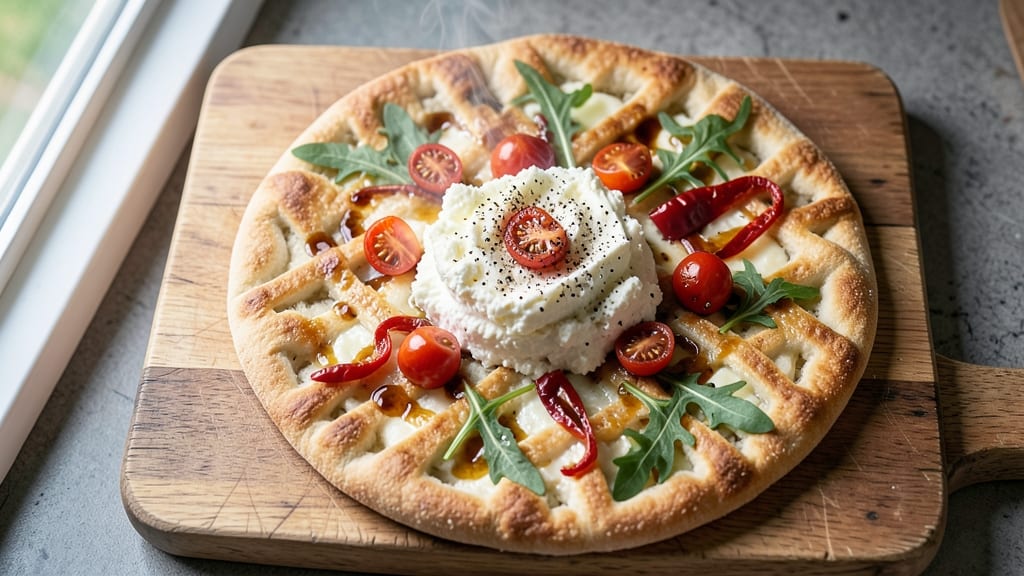
This goat cheese flatbread recipe delivers the perfect balance of crispy crust and creamy herbed filling that transforms any appetizer spread into a showstopper. The secret lies in a simple yeast dough that develops just enough chew while baking, paired with tangy goat cheese that melts into a velvety center.
I've tested countless variations, and this method consistently yields flatbreads with golden edges and a tender interior that holds up to slicing—no soggy centers here.
The process is straightforward but requires precision in the dough handling and cheese preparation. You'll start with a basic yeast dough that proofs overnight for enhanced flavor, then roll it thin enough to achieve that signature crispiness while keeping it sturdy enough to hold the filling.
The herbed goat cheese mixture—combining soft goat cheese with fresh herbs, garlic, and a touch of lemon zest—adds a sophisticated depth that elevates this dish beyond simple flatbread territory.
What you'll end up with is a golden, crispy flatbread with a rich, herbed goat cheese center that's warm, stretchy, and packed with flavor in every bite. The contrast between the crisp exterior and creamy interior makes each slice irresistible, perfect for serving at gatherings or as an elegant starter.
Once baked, it holds together beautifully for slicing and plating, making it ideal for both casual and formal occasions.
For extra flair, brush the baked flatbread with garlic-infused olive oil or drizzle with a balsamic reduction before serving. Pair it with a simple arugula salad or roasted vegetables to complete the meal.
The recipe scales easily, so you can make a single flatbread for two or double the batch for a crowd—either way, the results are consistently impressive.
Ingredients for goat cheese flatbread
Basic dough meets herbed goat cheese for a crispy, creamy flatbread masterpiece.
| Ingredient | Amount | Notes |
|---|---|---|
| All-Purpose Flour 🌾 | 3 cups | Unbleached preferred for texture |
| Active Dry Yeast 🍞 | ¼ tsp | Ensure freshness (test in warm water) |
| Granulated Sugar 🍬 | ½ tsp | Feeds yeast for rise |
| Unsalted Butter 🧈 | ¼ cup | Cold, cubed for dough |
| Large Eggs 🥚 | 1 whole | Room temperature for mixing |
| Warm Water 💧 | ½ cup | 110°F for yeast activation |
| Sea Salt 🧂 | ½ tsp | Fine grain preferred |
| Extra-Virgin Olive Oil 🫒 | 1 tbsp | For dough and brushing |
| Soft Goat Cheese 🧀 | 8 oz | Loganberry or herbed variety |
| Fresh Chives 🌿 | ¼ cup | Finely chopped for herbed filling |
| Fresh Dill 🌿 | 0.15 cup | Finely chopped for herbed filling |
| Garlic Cloves 🧄 | 2 cloves | Minced for herbed filling |
| Lemon Zest 🍋 | 1 tsp | From 1 organic lemon |
| Ground Black Pepper 🌶️ | ¼ tsp | Freshly ground for filling |
| Semolina Flour 🌾 | ¼ cup | For dusting work surface |
The yeast and flour are the foundation here. King Arthur or Bob's Red Mill all-purpose flours work best for this dough—they hold shape during proofing and create that signature crispy crust. For the yeast, Saf-Instant is my go-to because it doesn't require activation in water first, but classic active dry yeast works too if you give it the 5-minute warm water test. The goat cheese is non-negotiable—Loganberry or herbed varieties from the cheese counter add depth without overpowering. If you're using a plain goat cheese, fold in extra herbs to compensate. For the herbs, fresh is ideal, but if you're using dried, reduce to one-third the amount and toast them lightly in a dry pan first to intensify the flavor.
No chives? Fresh parsley or green onions work in a pinch, though chives provide that delicate onion note that balances the creaminess. Short on dill? Fresh basil or tarragon can substitute, but the flavor profile shifts slightly. The lemon zest can be swapped for orange zest if you prefer a sweeter note, though lemon keeps it bright. For the olive oil, high-quality extra-virgin makes a difference—look for brands like California Olive Ranch or Colavita that have that peppery kick. If you're making this ahead, prepare the herbed cheese filling first and store it in the fridge for up to 2 days—it actually tastes better the next day as the flavors meld.
The dough keeps best in the fridge for 2 days wrapped tightly in plastic, or you can freeze it for up to 1 month—just let it thaw on the counter before shaping. The herbed goat cheese filling stays fresh for 3 days in the fridge, making this a great make-ahead appetizer. Once baked, the flatbreads reheat beautifully in a 350°F oven for 5-7 minutes to restore crispiness. For serving, brush with garlic-infused olive oil or drizzle with balsamic reduction—both elevate the dish without overpowering the delicate flavors.
Why You'll Love This Recipe
- No-Yeast Struggle: I swear by this dough—just flour, yeast, sugar, and butter. No kneading, no waiting for gluten to develop. The yeast works its magic in 30 minutes while you chop veggies or pour wine.
- Creamy Crisp Magic: That first bite—warm, buttery flatbread with tangy goat cheese melting into crispy edges? It’s the kind of combo that makes you pause mid-chew. Honestly, I’ve tried fancy store-bought versions, and this beats them every time.
- Lunchbox Hero: Between us, this flatbread is my go-to for packed lunches. Roll it up with prosciutto and arugula, or fold it into a sandwich—it stays fresh for days and turns boring meals into something exciting.
- Pantry Staple: Flour, butter, eggs—ingredients you already own. No specialty items, no last-minute grocery runs. And if you bake a batch? They reheat in seconds, so leftovers never feel like a chore.
Step-by-step instructions for goat cheese flatbread with herbed filling
Here's how to create a golden, crispy crust with a rich herbed goat cheese center.
Prepare the Yeast Dough Base
In a large mixing bowl, combine the 0.5 cup warm water with the 0.25 tsp active dry yeast and 0.5 tsp granulated sugar. Let this sit for 5-7 minutes until it becomes frothy and bubbly—this confirms your yeast is active. If it doesn't bubble, your yeast may be stale and should be replaced.
Add the 3 cups all-purpose flour and 0.5 tsp sea salt to the bowl. Mix with a wooden spoon until a shaggy dough begins to form. Then incorporate the 0.25 cup cold unsalted butter, cut into small cubes, and the 1 whole large egg. Gradually add the 1 tbsp extra-virgin olive oil while kneading the dough until it comes together into a smooth, elastic ball. The dough should be slightly tacky but not sticky to the touch.
Create the Herbed Goat Cheese Filling
In a separate small bowl, combine the 8 oz soft goat cheese with the 0.25 cup finely chopped fresh chives, 0.15 cup finely chopped fresh dill, 2 cloves minced garlic, 1 tsp lemon zest, and 0.25 tsp freshly ground black pepper. Mix thoroughly until the goat cheese is completely blended and the herbs are evenly distributed. The filling should be smooth with visible flecks of green herbs and bright yellow lemon zest.
Transfer the filling to a small airtight container and refrigerate until ready to use. This keeps the goat cheese from melting prematurely during the shaping process. The filling should be cool but still pliable when you're ready to assemble the flatbreads.
Shape and Proof the Flatbreads
Lightly dust your work surface with 0.25 cup semolina flour and divide the dough into 4 equal portions. Roll each portion into a 12-inch circle, about ¼-inch thick. Using a sharp knife or pizza cutter, make a 4-inch diameter circle in the center of each dough circle—this creates the well for the filling. Press gently to ensure the well holds its shape.
Place 2 tablespoons of the herbed goat cheese filling into the center of each dough circle. Fold the edges of the dough up and over the filling, creating a sealed pocket. Transfer each assembled flatbread to a parchment-lined baking sheet, seam-side down. Cover with a clean kitchen towel and let them proof in a warm place for 30-45 minutes until they've risen about 50% and feel slightly puffy to the touch.
Bake to Crispy Perfection
Preheat your oven to 425°F with a baking stone or inverted baking sheet on the middle rack. This creates a hot, even surface for baking. Brush the tops of the flatbreads with a little extra extra-virgin olive oil to enhance browning. Bake for 12-15 minutes until the crust is deep golden brown and crispy, while the filling remains soft and gooey inside.
For extra crispiness, transfer the baked flatbreads to a wire rack and let them cool for 5 minutes. The contrast between the crispy crust and creamy filling is what makes these flatbreads so special. Serve warm with a simple arugula salad or as a delicious appetizer with your favorite dipping sauce.
Pro Tips For Making Goat Cheese Flatbread
- Chill the Dough: After kneading, let the dough rest in the fridge for at least 1 hour—yes, even if you’re eager to bake. Cold dough rises slower but develops a better texture, and it won’t deflate when you stretch it later. I learned this the hard way when my first batch turned out dense and chewy.
- Soften the Butter First: Take the unsalted butter out of the fridge 30 minutes before using—it should be soft enough to press with a finger but not melted. Cold butter creates tough pockets in the dough, while warm butter blends smoothly and gives that melt-in-your-mouth finish. (And no, microwaving it doesn’t count—just leave it out.)
- Skip the Overmixing: Once you add the yeast and sugar to the flour, mix just until combined—maybe 30 seconds. Overworking the dough kills the yeast and makes the flatbread tough. I used to think more mixing = better texture, but now I stop as soon as the ingredients clump together.
- Roll It Thick: Stretch the dough to about ¼-inch thickness—thinner spots burn before the edges cook. Use a bench scraper to keep it even, and resist the urge to press too hard. Uneven thickness is why my first batch had crispy bits and raw centers. (A pizza peel helps, but a parchment-lined baking sheet works too.)
Flavor customization for goat cheese flatbread
Sweet & Tangy Twist
Swap the lemon zest for 1 tsp orange zest and add ½ tsp vanilla extract to the herbed goat cheese filling for a bright, citrusy-sweet flavor. I also like to fold in ¼ cup finely chopped dried apricots for chewy texture and natural sweetness.
This variation works especially well with a drizzle of honey-balsamic reduction after baking. 🍊
Spicy Kick
For heat lovers, stir 1 tsp harissa paste or ½ tsp cayenne pepper into the goat cheese filling. I recommend using Penzeys brand harissa for its smoky depth.
Top with crumbled feta cheese before baking to create a spicy, creamy contrast. Serve with a cooling mint yogurt dip to balance the heat. 🌶️
Sun-Dried Tomato & Basil
Blend ¼ cup sun-dried tomatoes (oil-packed) into the goat cheese filling for a rich, umami depth. Add 2 tbsp finely chopped fresh basil and a pinch of red pepper flakes.
Brush the baked flatbreads with garlic-infused olive oil and sprinkle with flaky sea salt before serving. This Italian-inspired variation pairs beautifully with a glass of Chianti. 🍅
Smoky Chipotle
Infuse the goat cheese with smoky heat by mixing in 1 tsp adobo sauce from a can of chipotle peppers. Add ½ tsp ground cumin and ¼ cup crumbled cotija cheese for a Mexican-inspired twist.
Brush the baked flatbreads with chipotle mayo (mayo + 1 tsp adobo sauce) for extra smoky flavor. Serve with sliced avocado and lime wedges. 🔥
Herb-Forward Variation
For a more pronounced herb flavor, increase the fresh herbs to ⅓ cup total (mix of chives, dill, and parsley) and add 1 tsp fresh thyme leaves. Fold in 1 tbsp chopped walnuts for crunch. This earthy, aromatic version pairs perfectly with a white wine reduction drizzle. 🌿
Cheesy Upgrade
Mix 4 oz goat cheese with 4 oz cream cheese for a richer, creamier filling. Add ½ tsp smoked paprika and 1 tsp chopped sun-dried tomatoes. Brush the baked flatbreads with garlic butter (melted butter + minced garlic) before serving. This decadent version feels restaurant-worthy. 🧀
Nutrition facts
Frequently asked questions
Can I make this goat cheese flatbread ahead of time?
Prepare the dough up to 2 days in advance and refrigerate it wrapped tightly. For the filling, mix the herbed goat cheese and store it separately for up to 3 days—it actually tastes better after flavors meld. Assemble the flatbreads and refrigerate them for 1 hour before baking to ensure proper rising.
What if my flatbread dough doesn't rise properly?
Check your yeast first—it should bubble within 5-7 minutes in warm water. If not, replace it. Ensure your dough is in a warm spot (like a turned-off oven with a bowl of hot water inside) for proofing. Cold environments slow yeast activity. Also, don't over-knead the dough—it should be soft but slightly tacky, not stiff.
Can I use store-bought pizza dough instead?
Yes, but expect less flavor and texture control. Use 1 pound of pizza dough (about 2 balls) and roll it into 12-inch circles. Skip the yeast activation step and proceed with shaping. The crust will be crispy but won't have the same depth of flavor as homemade dough. For best results, proof the dough for 20 minutes before baking.
How do I prevent the goat cheese filling from leaking?
Chill the filling for at least 30 minutes before assembling to firm it up. When rolling the dough, press the edges firmly around the filling to create a tight seal. Use 2 tablespoons of filling per flatbread—too much increases leakage risk. If needed, add a pinch of flour to the dough edges to help them stick together.
What are the best toppings for serving?
Drizzle with garlic-infused olive oil or balsamic reduction for extra flavor. Add fresh arugula or baby spinach for a bright contrast. For protein, top with prosciutto or grilled chicken. A sprinkle of flaky sea salt or crushed black pepper enhances the herbed filling.