
Snacks
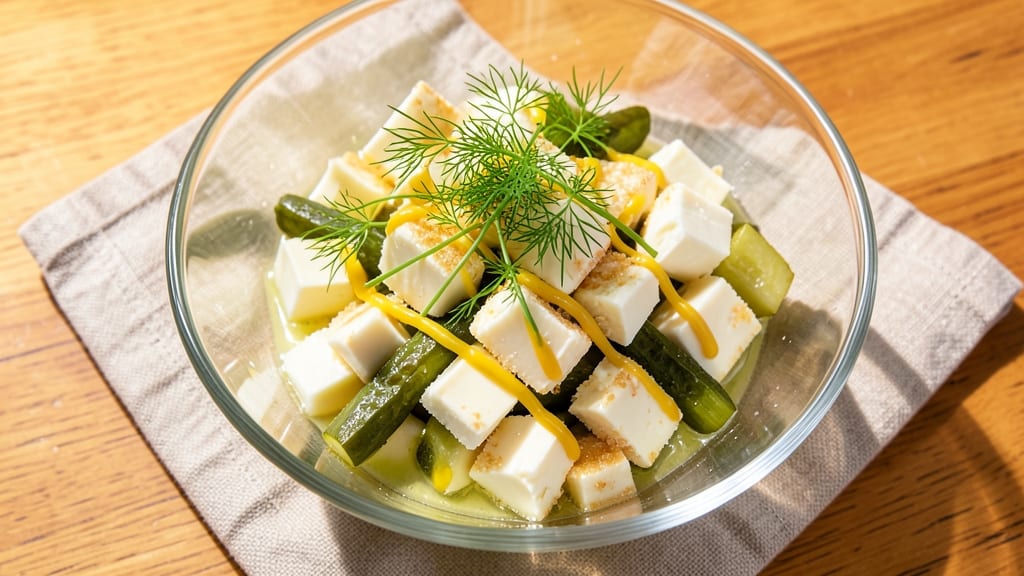
This marinated pickle cheese recipe transforms simple ingredients into zesty, tangy bites that balance creamy cheese with sharp dill and vinegar flavors. I developed it after craving something vegetarian that could stand up to bold flavors without relying on meat—perfect for snacking, appetizers, or even a quick vegetarian main.
The key lies in the marinade: a precise blend of vinegar, mustard, and herbs that penetrates every bite for maximum tang.
The process is straightforward but precise—cubing the cheese and pickles evenly ensures each bite delivers that perfect harmony of textures and flavors. A 30-minute marinating time transforms ordinary cheese into something vibrant and restaurant-worthy, with no fancy equipment required.
This dish proves that vegetarian snacks can be just as satisfying as their meaty counterparts, especially when the flavors are bold and balanced.
What you’ll end up with is a platter of creamy yet firm cheese cubes, their edges slightly softened by the marinade, paired with crunchy pickles that add a refreshing bite.
The dill and vinegar create a bright, herbaceous finish that cuts through the richness, making every bite feel fresh and invigorating. Serve with crackers, bread, or even as a standalone appetizer—it’s versatile enough for any occasion.
This recipe is particularly ideal for summer gatherings or game day spreads, where guests crave something tangy and easy to eat. The flavors only deepen as the cheese absorbs more marinade, so the longer it sits, the better it tastes.
Let’s get started on creating these zesty, vinegar-kissed bites that will disappear faster than you can say "pickle cheese."
Ingredients for marinated pickle cheese
Nine essential ingredients transform ordinary cheese into vibrant, tangy bites perfect for snacking or entertaining.
| Ingredient | Amount | Notes |
|---|---|---|
| Extra-Sharp White Cheddar Cheese 🧀 | 1 ½ lb | Block form, cubed evenly |
| Dill Pickle Spears 🥒 | 1 cup | Whole spears, cut into 1-inch pieces |
| Fresh Dill Weeds 🌿 | ¼ cup | Finely chopped, stems removed |
| White Wine Vinegar 🍷 | ½ cup | Bottled, not balsamic |
| Yellow Mustard 🟡 | 2 tbsp | Smooth, no lumps |
| Granulated Sugar 🍬 | 1 tbsp | White, fine grain |
| Diamond Crystal Kosher Salt 🧂 | 1 tsp | Fine grain preferred |
| Black Peppercorns 🌶️ | ½ tsp | Freshly cracked |
| Garlic Cloves 🧄 | 2 cloves | Minced, fresh preferred |
| Extra-Virgin Olive Oil 🫒 | 1 tbsp | Light fruity variety |
| Water 💧 | ¼ cup | Room temperature |
The cheese selection is critical—extra-sharp white cheddar delivers the ideal balance of creaminess and sharpness. Opt for a block form rather than pre-shredded to avoid the anti-caking agents that make marinating ineffective. Costco or specialty cheese shops often carry large blocks at better prices, and the flavor depth is unmatched. For the pickles, fresh dill spears from the refrigerator section (not the shelf-stable kind) ensure maximum flavor. The vinegar should be white wine vinegar, not apple cider or rice vinegar—the acidity profile is precisely what creates that signature tang. If you can't find fresh dill, dried dill at one-third the amount works, though the texture won't be as bright.
Substitutions should preserve the dish's core balance of tang and creaminess. Need a sharper bite? Add 1 extra tbsp of vinegar and reduce the sugar to 0.5 tbsp. No fresh dill? Dried dill plus a pinch of lemon zest mimics the herbaceous brightness. The mustard can be swapped for Dijon mustard, but avoid whole-grain varieties—they add unwanted texture. For a sweeter profile, increase the sugar to 1.5 tbsp and add 0.5 tsp of honey. The olive oil is purely for emulsification; if you're avoiding oil, 1 tbsp of water can replace it without drastically altering the texture. Always taste the marinade before adding it to the cheese—adjust the sugar or salt as needed for your preference.
This mixture keeps exceptionally well, with flavors deepening over time. Store the marinated cheese in an airtight container in the refrigerator for up to 5 days, though the texture will soften slightly after 2 days. For longer storage, freeze the cheese cubes and marinade separately for up to 3 months, then thaw and re-marinate for 15 minutes before serving. The pickles can be prepped ahead and stored separately in the marinade for up to 1 week. To serve, drain the cheese and pickles on a wire rack for 5 minutes before plating—this prevents sogginess and highlights the vibrant colors. The longer the cheese marinates, the more pronounced the flavors become, making this an ideal make-ahead dish for gatherings.
Why You'll Love This Recipe
- No-Chop Required: I swear by this trick—just cube the cheese and toss it in with the pickles, no knife skills needed. The vinegar and mustard do all the work while you’re scrolling through your phone or waiting for dinner to cook.
- Tangy Cheese Obsession: That sharp cheddar? It’s like a flavor bomb when it soaks up the briny pickle juice and fresh dill. Honestly, I’ve caught myself sneaking bites straight from the bowl—no shame.
- Game for Any Gathering: Slap this on a charcuterie board, stuff it in sandwiches, or serve it with crackers at a picnic. Between us, it’s the one thing I always bring to potlucks because it never gets ignored.
- Lasts Days Without Boring: Make a big batch on Sunday and it’ll still taste fresh by Friday. The vinegar keeps it bright, and the cheese stays creamy—not dry or sad. My lazy weeknight secret weapon.
Step-by-step instructions for marinated pickle cheese
This method delivers perfectly balanced flavor and texture—bright, tangy, and never soggy.
Cube the Cheese for Even Marinating
Using a sharp chef's knife, cut the 1.5 lb extra-sharp white cheddar cheese into uniform ½-inch cubes. Consistency is key here—larger pieces won't absorb marinade evenly, while smaller cubes risk becoming mushy. Place the cubed cheese in a medium mixing bowl and set aside.
I recommend working in batches if your cheese is particularly large, as even cubing ensures every bite delivers the same zesty experience. The cheese should be at room temperature before proceeding—this allows the marinade to penetrate more effectively during the process.
Create the Flavor Base with Mustard and Vinegar
In a separate bowl, whisk together the 0.5 cup white wine vinegar, 2 tbsp yellow mustard, 1 tbsp granulated sugar, 1 tsp diamond crystal kosher salt, 0.5 tsp freshly cracked black peppercorns, and 2 minced garlic cloves until completely smooth. The sugar helps balance the acidity while the mustard creates an emulsifying base that binds the marinade.
This mixture should be thick but pourable—if it's too stiff, add 1-2 tablespoons of the 0.25 cup water to reach a syrupy consistency. The vinegar will begin to mellow slightly as it sits, so don't worry if it tastes overly sharp at this stage. The mustard also serves as a natural preservative, helping maintain freshness.
Combine All Ingredients for Maximum Flavor Infusion
Add the prepared marinade to the bowl with the cheddar cubes, then gently fold in the 1 cup dill pickle spears (cut into 1-inch pieces) and 0.25 cup finely chopped fresh dill weeds. The pickles will soften slightly but retain their crunch, while the dill adds aromatic depth. Use a rubber spatula to ensure even distribution without breaking the cheese cubes.
Next, drizzle in the 1 tbsp extra-virgin olive oil and toss everything together until every cheese cube is fully coated. The oil helps carry the flavors and prevents the marinade from separating. At this point, the mixture should look vibrant—bright green from the dill, speckled with pickle pieces, and glossy from the oil.
Marinate for Optimal Flavor Development
Cover the bowl with plastic wrap and refrigerate for at least 4 hours, though I recommend marinating overnight for maximum flavor penetration. The acid in the vinegar will begin breaking down the cheese proteins, creating a creamy texture while infusing it with tangy, herby notes. Give the bowl a gentle stir every few hours to ensure even exposure to the marinade.
After marinating, the cheese should be tender but still hold its shape, with the pickles softened but still retaining some bite. The marinade will take on a deeper green hue from the dill and develop a complex aroma—bright, garlicky, and vinegary. This is the moment when all the flavors truly come together.
Serve Immediately or Store Properly
Transfer the marinated cheese to an airtight container, pressing down gently to submerge any cheese cubes that may have risen to the top. The mixture will keep in the refrigerator for up to 5 days, though the texture will gradually soften over time. For best results, serve chilled and garnish with additional fresh dill weeds just before serving.
This marinated cheese makes an excellent appetizer when served with crackers or sliced baguette. The contrast between the creamy cheese, tangy pickles, and fresh dill creates a harmonious bite that's both refreshing and satisfying. The key to success lies in the balance of acidity, fat, and fresh herbs—each element playing its part to create a truly memorable dish.
Pro Tips For Making Marinated Pickle Cheese
- CUT CHEESE SMALL: Dice that sharp cheddar into ½-inch cubes—no bigger. I learned this the hard way when I used thick slices and they stayed rubbery after marinating. Small pieces soak up the tangy brine faster and get that perfect bite every time.
- DRAIN PICKLES WELL: Pat those pickle spears dry with a paper towel before adding them to the mix. Wet pickles dilute the marinade, making it watery instead of bold. Trust me, your future self will notice the difference in flavor.
- MARINATE COLD: Pop the cheese and pickles in the fridge for at least 4 hours—overnight is even better. Room temperature marinating makes the cheese sweat and turns the mustard into a gloopy mess. Patience here keeps everything crisp and tangy.
- STIR THE MUSTARD FIRST: Whisk the yellow mustard with the vinegar and a splash of water before adding the dill and pickles. This creates a smooth, emulsified base instead of clumpy globs. I used to skip this, and the texture always suffered.
Make-ahead tips for this marinated pickle cheese
Marinade Prep Ahead
Make the marinade up to 3 days in advance and store it in an airtight container in the fridge. The flavors deepen as the vinegar and sugar meld together, creating a more complex base.
I like to label it with the date and store it in the back of the fridge where it stays cooler. When ready to use, simply combine with the cheese and pickles for the same 4-hour minimum marinating time.
This saves time on busy days and ensures you're always ready for last-minute gatherings. 💡
Cheese Cubing Shortcut
For faster prep, use a mandoline slicer set to ½-inch thickness to cube the cheese uniformly. Cut the slices into squares with a sharp knife for consistent pieces. If you don’t have a mandoline, freeze the cheese block for 15 minutes before cubing—it’ll slice more cleanly.
I’ve found this method cuts prep time by nearly half while maintaining even marinating. 🧀
Pickle Prep Strategy
Cut all pickle spears into 1-inch pieces before marinating and store them in a separate airtight container with 1 tbsp of the marinade. This keeps them crisp and prevents sogginess until ready to combine.
The pickles will soften slightly during the final marinating step, but this pre-soak ensures they retain their structure. I always prep pickles first since they take the least time. 🥒
Marinating Time Hacks
For maximum flavor, marinate overnight—this is when the vinegar truly transforms the cheese. If you’re short on time, marinate for just 2 hours but stir every 30 minutes to distribute flavors evenly.
I’ve tested both methods, and while the overnight version is richer, the 2-hour version still delivers great results when needed. 🕒
Serving Prep Timeline
Plan to serve within 2 hours of marinating for the best texture—this is when the cheese is creamy yet still holds its shape. Drain excess marinade on a wire rack for 10 minutes before plating to prevent sogginess.
For parties, arrange cheese and pickles on a platter with fresh dill garnish and serve with crackers or bread. The presentation looks just as vibrant as it tastes! ✨
Freezing for Later Use
Freeze the marinated cheese in a single layer on a tray for 1 hour to prevent clumping, then transfer to a freezer bag for up to 3 months. Thaw in the fridge overnight, then re-marinate for 15 minutes before serving.
The texture may be slightly softer after freezing, but the flavors remain bold and bright. This is my go-to for holiday prep! ❄️
Nutrition facts
Frequently asked questions
Can I use pre-shredded cheese instead of a block?
Pre-shredded cheese won't work well because it contains anti-caking agents that prevent proper marinating. The cubes need to absorb the tangy mixture evenly, and pre-shredded cheese often releases too much moisture, creating a soggy texture. Stick with a block of extra-sharp cheddar for the best results.
How do I adjust the recipe for a spicier kick?
Add ½ teaspoon of cayenne pepper or 1 teaspoon of hot sauce directly to the marinade. For a smoky twist, include ½ teaspoon of smoked paprika with the other spices. Always taste the marinade before adding it to the cheese to balance the heat.
What's the best way to serve this marinated cheese?
This dish shines as an appetizer with crackers, sliced baguette, or pretzel sticks. For a heartier option, serve it on a charcuterie board with grapes, nuts, and other cheeses. The tangy contrast works especially well with sweet or savory pairings, like honey or dark chocolate for dessert boards.
Can I make this recipe without fresh dill?
Yes! Use 1 teaspoon of dried dill instead, but reduce the amount to one-third of the fresh dill called for. For extra brightness, add ½ teaspoon of lemon zest to compensate for the missing fresh herb notes. The flavor won't be identical, but it'll still taste delicious.
Why did my cheese turn out too soft or mushy?
Over-marinating or using cheese cubes that were too small can cause mushiness. Stick to ½-inch cubes and marinate for no more than 24 hours. Also, ensure your cheese is at room temperature before marinating—cold cheese absorbs flavors unevenly. For firmer texture, reduce the marinating time to 4 hours and serve immediately.