
Main Courses
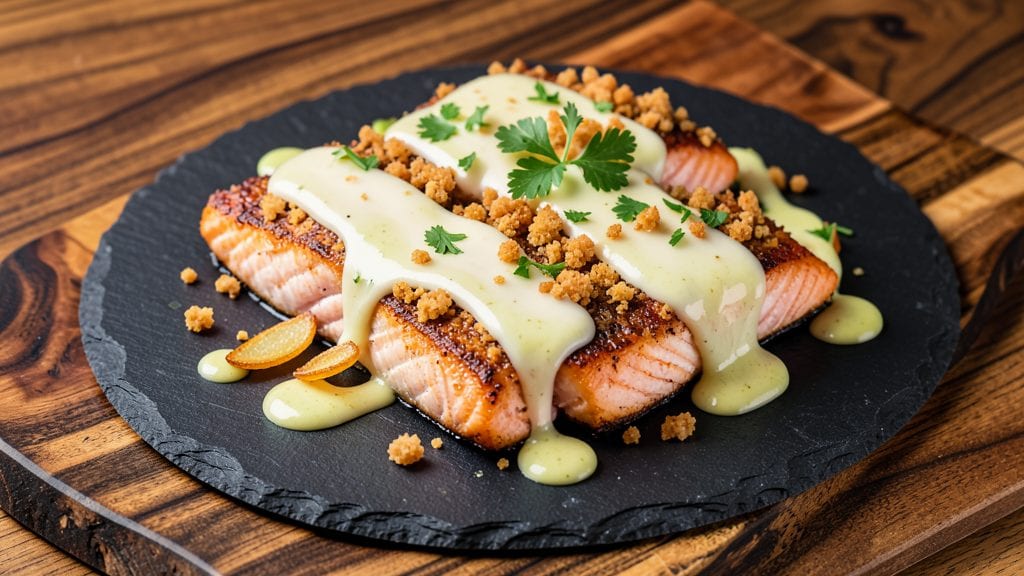
This salmon cheese steak recipe reimagines a Philly classic with delicate Atlantic salmon instead of beef, delivering crispy edges and gooey melted cheese in every bite. The technique transforms flaky salmon into a satisfying handheld meal that’s perfect for lunch or dinner—no beef required.
I developed this version after craving something hearty yet light, and the result is a dish that feels indulgent without being heavy.
The secret lies in a light breading that stays crispy while the salmon cooks through, paired with a generous layer of melted provolone and mozzarella. You’ll need just 15 minutes of active prep, followed by 5 minutes of pan-searing, making it ideal for weeknight dinners.
The dish works equally well with an air fryer or stovetop, giving you flexibility based on your kitchen tools.
What you’ll end up with is a crispy, golden-brown salmon cutlet stuffed with melted cheese, offering a satisfying contrast of textures—crunchy outside, creamy inside. The sauce (optional but recommended) ties everything together with a tangy, savory finish.
Serve it with a simple arugula salad or roasted potatoes to round out the meal.
This recipe is a game-changer for pescatarians and seafood lovers, offering the comfort of a classic steak sandwich without the meat. The method is straightforward, but the result feels like a restaurant-quality dish you’d happily order again and again.
Ingredients for salmon cheese steak
Four flaky fillets, a crispy crust, and melty cheese—this salmon cheese steak redefines comfort food.
| Ingredient | Amount | Notes |
|---|---|---|
| Atlantic Salmon Fillets 🐟 | 4 whole | Skin-on, 6-8 oz each, pounded thin |
| All-Purpose Flour 🌾 | ½ cup | For light breading, sifted |
| Panko Breadcrumbs 🍞 | ½ cup | For extra crispiness |
| Provolone Cheese 🧀 | 8 oz | Sliced thin, semi-soft variety |
| Mozzarella Cheese 🧀 | 8 oz | Fresh, sliced thin |
| Large Eggs 🥚 | 2 whole | Beaten for egg wash |
| Dijon Mustard 🍯 | 1 tbsp | For extra flavor |
| Extra-Virgin Olive Oil 🫒 | ¼ cup | For frying, high smoke point |
| Unsalted Butter 🧈 | 2 tbsp | For crispy crust |
| Garlic Powder 🧄 | ½ tsp | For seasoning |
| Onion Powder 🧅 | ½ tsp | For seasoning |
| Ground Black Pepper 🌶️ | ½ tsp | Freshly cracked |
| Kosher Salt 🧂 | 1 tsp | Diamond Crystal preferred |
| Lemon Wedges 🍋 | 4 whole | For serving |
| Philly Cheesesteak Sauce 🍅 | ½ cup | Optional, homemade or store-bought |
The salmon is the star, so Atlantic fillets with skin-on are non-negotiable—they stay together better. Grab wild-caught from Whole Foods or Trader Joe's for the best flavor, or your local fishmonger if available. Pound the fillets to an even ¼-inch thickness (use a rolling pin or heavy pan). The Provolone and mozzarella combo is key—Provolone adds tang, mozzarella melts perfectly. Buy fresh mozzarella in a tub, not pre-shredded, and slice it yourself for that perfect stretch. For the breading, Panko plus all-purpose flour gives you that satisfying crunch without being too heavy.
No Panko? Regular breadcrumbs plus a pinch of cornstarch work in a pinch. Short on provolone? Substitute extra mozzarella or cheddar, but you’ll lose that classic Philly tang. The Dijon mustard is optional but adds depth—if you skip it, add an extra pinch of garlic powder. For the sauce, homemade with ketchup, horseradish, and Worcestershire is ideal, but a good store-bought version (like Sweet Baby's) works too. The lemon wedges? Fresh Meyer lemons if you can find them—they’re sweeter and brighter. And trust me on the high-smoke-point olive oil—regular olive oil burns too easily.
Prep the salmon and cheese ahead, but assemble the sandwiches right before cooking—they’ll get soggy if you bread too early. The breading stays crispy for about 10 minutes after frying, so work quickly. Leftover breaded salmon? Freeze for up to 1 month—just reheat in a skillet with a splash of water to revive the crunch. The sauce keeps for 1 week in the fridge, and the lemon juice brightens it up if you let it sit too long. Serve with toasted hoagie rolls if you’re feeling extra authentic, or keep it simple with a side salad.
Why You'll Love This Recipe
- No-Fuss Crispiness: I swear by that panko crust—just flour, salt, and egg to bind it. Five minutes of dredging, and you’ve got golden, shatteringly crisp edges that hold up like a dream, even if I burn the toast next to it.
- Melty Magic Combo: Provolone and mozzarella team up for that perfect stretchy pull. The provolone adds a sharp bite, while the mozzarella? It’s the creamy hug your taste buds didn’t know they needed—especially when the cheese oozes over the flaky salmon.
- Weeknight to Dinner Party: Honestly, this is my lazy Sunday lunch and my "I have friends over" dish. For a crowd, just double the salmon and cheese—same prep, twice the wow. Or meal prep the steaks ahead; they reheat like a champ in the oven.
- Salmon on a Budget: I used to flinch at salmon prices, but this recipe makes it feel indulgent without breaking the bank. The crust and cheese stretch the fillets further, and frozen salmon works just as well—no one can tell the difference. (Yes, even on a Tuesday night.)
Step-by-step instructions for crispy pan-seared salmon with Philly-style melted cheese
Here's how to create a restaurant-worthy fusion dish with perfectly crispy salmon and gooey melted cheese.
Prepare the Salmon and Seasoning
Start by patting each of the 4 whole Atlantic Salmon Fillets dry with paper towels—this ensures maximum crispiness when we sear them. Place them skin-side down on a cutting board and gently pound them to an even ¼-inch thickness using a meat mallet. The goal is to create uniform thickness so they cook evenly.
In a small bowl, whisk together the 0.5 cup All-Purpose Flour, 0.5 tsp Garlic Powder, 0.5 tsp Onion Powder, 0.5 tsp Ground Black Pepper, and 1 tsp Kosher Salt. This dry rub will create the perfect crust for our salmon. I like to use Diamond Crystal salt here—it dissolves better and has a finer texture that clings to the fish.
Create the Breading and Egg Wash
Set up three shallow dishes: one for the beaten 2 whole Large Eggs, one for the 0.5 cup Panko Breadcrumbs, and one for the flour mixture. Crack the eggs into a bowl and whisk vigorously until fully combined. The egg wash should be smooth with no streaks—this ensures even coating and better adhesion.
Add 1 tbsp Dijon Mustard to the beaten eggs and mix well. The mustard adds a subtle tang that complements the rich cheese and salmon perfectly. Keep the breadcrumbs separate for now—we'll use them after the egg wash to create that extra-crispy texture we're after.
Sear the Salmon to Golden Perfection
Heat 0.25 cup Extra-Virgin Olive Oil and 2 tbsp Unsalted Butter in a large skillet over medium-high heat until the butter foams and the oil shimmers. This should take about 3-4 minutes—you're looking for the butter to melt completely and the oil to be hot enough to sizzle when you add the salmon.
Working in batches if needed, dip each salmon fillet first into the flour mixture, letting any excess fall off, then into the egg wash, and finally into the Panko Breadcrumbs, pressing gently to adhere. Place the coated fillets in the skillet and cook for 3-4 minutes per side until golden brown and crispy. Don't move them around—they need time to develop that perfect crust.
Layer the Cheese and Finish Cooking
Remove the salmon from the skillet and set aside on a wire rack. Reduce the heat to medium and add the sliced 8 oz Provolone Cheese and 8 oz Mozzarella Cheese to the skillet. Let the cheese melt slightly for about 1 minute, stirring occasionally, until it becomes gooey and stretchy.
Return the salmon to the skillet, spooning the melted cheese mixture evenly over each fillet. Cover the skillet and let the salmon cook for an additional 2-3 minutes until the cheese is fully melted and bubbly. The cheese should be soft enough to pull gently with a fork but still hold its shape slightly.
Assemble and Serve
Transfer the salmon to serving plates and drizzle with the 0.5 cup Philly Cheesesteak Sauce. The sauce should coat the salmon and cheese evenly, adding that signature Philly flavor. Garnish each plate with a lemon wedge to cut through the richness of the cheese and salmon.
Serve immediately while the salmon is still hot and the cheese is perfectly melted. Each bite should deliver crispy breading, tender salmon, and gooey cheese all in one perfect package. The lemon wedge adds a bright contrast that keeps the dish from feeling too heavy.
Pro Tips For Making Salmon Cheese Steak
- Pat Dry First: Salmon releases water like a sweaty teenager at a dance—skip this, and your crust will turn to soup. Grab paper towels and press hard for 30 seconds. The extra effort guarantees a crispy panko coating instead of a sad, soggy mess.
- Preheat Pan Properly: I used to toss the fillets in at medium heat, thinking it was "gentler." Wrong. Your pan needs to scream—medium-high, with a visible shimmer of oil. Salmon cooks fast; a cold pan means gray, rubbery fish instead of golden, flaky perfection.
- Cheese Order Matters: Mozzarella melts first, then turns to goo. Provolone holds its shape better, so layer it underneath the mozzarella. Press it down gently—no need to squish like you’re making lasagna—and cover with foil for 2 minutes. Less cheese slide, more cheese stay.
- Skip the Double-Dip: You’ve breaded the salmon, then dipped it back in egg or flour to "fix" uneven coating. Resist. The first dip is enough—just press the panko extra firmly on the edges where it’s thin. Trust the process; the crust will set as it fries, not before. (Yes, even if it looks patchy.)
Regional styles of this dish
Philly-Inspired Style
This version stays true to the classic Philly cheesesteak by using a hoagie roll instead of a plate. Toast the roll lightly with 1 tbsp butter and layer the crispy salmon with melted cheese, then drizzle with Philly-style sauce (ketchup, horseradish, and Worcestershire).
Add thinly sliced bell peppers and onions for that authentic touch. I like to use Oscar Mayer roast beef-style rolls for that classic chewy texture. 🌭
Pacific Northwest Twist
Inspired by the region’s love of seafood and fresh herbs, swap the provolone for local smoked gouda and add fresh cilantro and scallions to the breading.
Top with a dill aioli> (mix ½ cup mayo, 1 tbsp lemon juice, and 1 tbsp chopped dill) instead of cheesesteak sauce. Serve with a side of garlic mashed potatoes to honor the region’s hearty flavors. 🌿
Japanese Fusion
For a lighter, umami-packed version, use Japanese panko for extra crispiness and add 1 tsp furikake seasoning> to the breading. Top with shredded mozzarella and a drizzle of tonkatsu sauce> (or sub with a mix of soy sauce, Worcestershire, and a touch of honey).
Garnish with pickled ginger and sesame seeds for a bright, tangy contrast. Serve with steamed jasmine rice> to balance the richness. 🍣
Southern BBQ Fusion
Give it a smoky kick by adding ½ cup BBQ sauce> (like Sweet Baby Ray’s) to the melted cheese layer. Top with crumbled bacon and sliced jalapeños> for heat and crunch.
Serve on a toasted brioche bun> with a side of collard greens> for a Southern-inspired twist. The smoky-sweet BBQ sauce pairs surprisingly well with the salmon’s natural richness. 🔥
Mediterranean Adaptation
Swap the provolone for feta cheese> and add kalamata olives and sun-dried tomatoes> to the breading. Drizzle with tzatziki sauce> (Greek yogurt, cucumber, garlic, and lemon) and garnish with fresh oregano and a sprinkle of crumbled feta>.
Serve with a side of hummus and warm pita> for a refreshing, flavor-packed meal. 🌊
Air Fryer Shortcut
For a hands-off version, coat the breaded salmon in the air fryer at 375°F for 8-10 minutes>, flipping halfway. Top with cheese and air fry for an additional 2-3 minutes> until melted.
This method keeps the salmon juicy while still delivering that crispy texture. Pair with roasted sweet potato wedges> for a lighter, healthier take on the classic. ⚡
Nutrition facts
Frequently asked questions
Can I use frozen salmon for this recipe?
Yes, but thaw it completely first in the refrigerator for 24 hours. Pat it very dry before breading to ensure maximum crispiness. Frozen salmon can release moisture, which makes the breading soggy. If you're short on time, use the cold-water thaw method in a sealed bag, changing the water every 30 minutes.
What's the best way to keep the breading crispy?
Work quickly after breading—cook the salmon within 10 minutes of dipping. Use a wire rack instead of a plate to drain excess oil, and keep the oven or air fryer preheated if you're making multiple batches. For extra crunch, add 1 tablespoon cornstarch to the breadcrumbs.
Can I make this recipe ahead of time?
Prep the breading station and slice the cheese, but assemble the sandwiches right before cooking. The breading loses crispiness if made too early. For make-ahead meals, bread the salmon and freeze it on a tray before adding cheese. When ready to cook, bake from frozen at 400°F for 12-15 minutes, then add melted cheese for the final 2 minutes.
What's the best cheese substitute if I don't have provolone?
Use sharp cheddar or Gruyère for a tangy flavor, or fontina for extra creaminess. Avoid pre-shredded cheese—it contains anti-caking agents that prevent proper melting. If you're vegetarian, swap for vegan mozzarella (like Miyoko's) and add a splash of plant-based milk to help it melt smoothly.
How do I make this dish air fryer-friendly?
Coat the breaded salmon with olive oil spray and air fry at 375°F for 8-10 minutes, flipping halfway. For cheese, place the salmon in the air fryer basket, top with cheese, and cook for an additional 2-3 minutes until melted. Watch closely—air fryers cook faster than stovetop methods. Serve with roasted sweet potato wedges for a lighter meal.