
Breakfast & Brunch
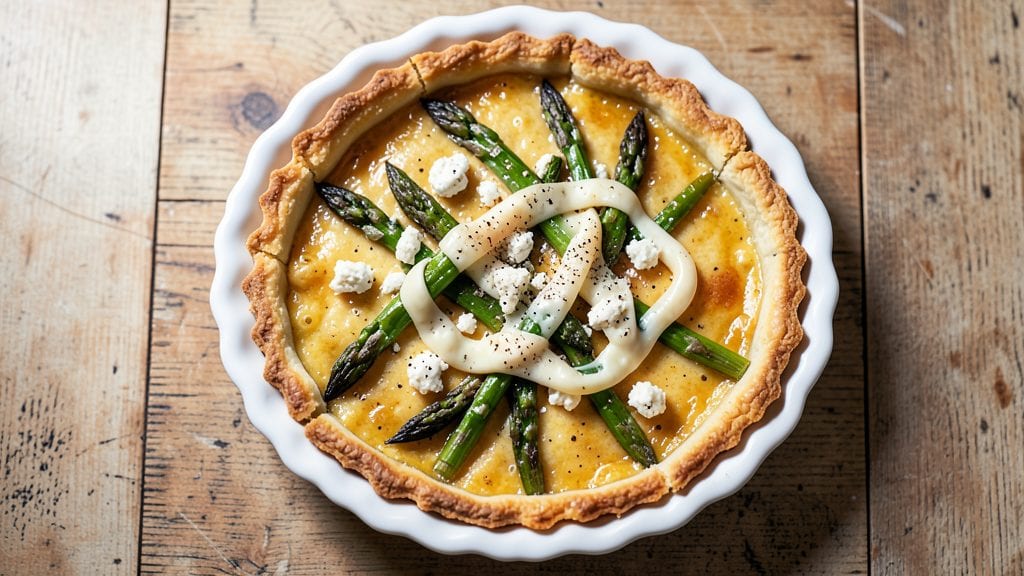
This asparagus and goat cheese quiche recipe transforms a simple breakfast into an elegant dish that balances earthy asparagus with tangy goat cheese in a creamy, golden crust.
The herbed crust adds depth while the filling delivers a perfect texture—fluffy yet rich—making it ideal for brunch gatherings or a sophisticated weekend meal. I developed this version after years of testing quiche recipes, ensuring every element comes together without shortcuts that compromise flavor.
The secret lies in the crust, whether you choose store-bought or homemade, and the proper ratio of eggs to milk for that signature creamy yet firm texture. Fresh asparagus adds bright, crisp bites that contrast beautifully with the soft goat cheese, while a sprinkle of herbs ties everything together.
This recipe delivers restaurant-quality results with precise oven temperatures and resting times that guarantee success every time.
By the time it emerges from the oven, you'll have a quiche with a golden, crisp crust encasing a velvety filling where tender asparagus spears peek through pockets of melted goat cheese.
The aroma alone will draw everyone to the table, and the first bite delivers that perfect balance of textures and flavors. It's the kind of dish that elevates a simple meal into something memorable.
Serve warm with a fresh salad or crusty bread to soak up every last bit of the creamy sauce. The recipe scales easily for parties, and leftovers reheat beautifully, making it a practical yet impressive choice for any occasion. Let's get started on creating this showstopper quiche.
Ingredients for asparagus and goats cheese quiche
Fresh asparagus and creamy goat cheese meet a herbed crust for a quiche that balances textures perfectly.
| Ingredient | Amount | Notes |
|---|---|---|
| Asparagus Spears 🥦 | 1 lb | Trimmed, tough ends removed |
| Goat Cheese 🧀 | 8 oz | Soft, crumbled variety |
| Large Eggs 🥚 | 4 whole | Room temperature preferred |
| Heavy Cream 🥛 | ½ cup | Full-fat for richness |
| Whole Milk 🥛 | ½ cup | Warmed slightly |
| All-Purpose Flour 🌾 | 1 cup | For crust base |
| Cold Unsalted Butter 🧈 | ½ cup | Cubed, for crust |
| Fresh Chives 🌿 | ¼ cup | Finely chopped |
| Fresh Dill 🌿 | ¼ cup | Finely chopped |
| Salt 🧂 | 1 ½ tsp | Kosher preferred |
| Black Pepper 🌶️ | ½ tsp | Freshly ground |
| Nutmeg 🌶️ | ¼ tsp | Freshly grated |
| Store-Bought Pie Crust 🍰 | 1 package | Unbaked, 9-inch |
The asparagus should be bright green and firm—avoid woody stems. Whole Foods and Trader Joe's carry excellent pre-trimmed spears, but trim ends yourself if buying from other stores. For goat cheese, chèvre with a soft, spreadable texture works best; avoid overly tangy varieties. The crust can be homemade, but Pepperidge Farm or Pillsbury pie crusts save time without sacrificing quality. Fresh herbs like chives and dill elevate the dish—buy them from the grocery store's refrigerated section and chop just before using to preserve their aroma.
No fresh dill? Dried dill at one-third the amount works, though fresh is preferred. Substitute heavy cream with half-and-half plus 1 tbsp butter if needed, but the texture won't be as rich. For a lower-fat option, use 2% milk instead of heavy cream, though the quiche will be slightly less velvety. If you're short on time, pre-cooked asparagus from the frozen section can be used, but fresh is ideal for that signature crisp-tender bite. The nutmeg adds warmth—omit if you dislike its flavor, but it's worth including for depth.
Assemble the quiche up to 24 hours ahead and refrigerate uncovered to prevent sogginess. Bake just before serving for the best texture. Leftovers keep for 3 days in the fridge, though they reheat best at low heat to avoid drying out. For parties, this recipe scales easily—double the filling and use a 12-inch pie crust. Store any unused goat cheese in an airtight container with a slice of bread to absorb moisture, keeping it fresh for up to 2 weeks.
Why You'll Love This Recipe
- One-Pan Magic: I swear by this recipe because it’s all about minimal cleanup. The asparagus roasts right in the pie dish while the crust bakes—no extra pans, no extra stress. Just slice, arrange, and let the oven do the work.
- Tangy Creamy Dream: That goat cheese? It’s the star—bright, rich, and melty in all the right ways. The heavy cream and eggs make it silky, while the asparagus adds a fresh, slightly bitter contrast that keeps every bite interesting.
- Weeknight Hero: Honestly, it’s my go-to when I need something impressive but not labor-intensive. Serve it for brunch with a side salad, or pack slices for lunch—it holds up perfectly and tastes even better the next day.
- Budget-Friendly Luxury: Between us, this quiche feels fancy but won’t break the bank. Goat cheese and asparagus are affordable in season, and the eggs stretch further than you’d think. Plus, leftovers reheat like a dream—just pop them in the oven and enjoy.
Step-by-step instructions for asparagus and goat cheese quiche
This method delivers a rich, creamy center with a perfectly herbed crust every time.
Prepare the Asparagus and Herbed Crust Base
Preheat your oven to 375°F. Trim the tough ends from the 1 lb asparagus spears and cut each spear into 1-inch pieces. Set aside. In a small bowl, combine the 1 cup all-purpose flour, 0.5 cup cold unsalted butter (cubed), 1.5 tsp salt, 0.5 tsp black pepper, 0.25 tsp nutmeg, 0.25 cup finely chopped fresh chives, and 0.25 cup finely chopped fresh dill. Using your fingers or a pastry cutter, work the butter into the flour mixture until it resembles coarse crumbs with pea-sized butter pieces.
Roll out the store-bought pie crust on a lightly floured surface to fit a 9-inch pie dish. Press it gently into the dish, trim any excess dough, and prick the bottom with a fork. Spread the herbed flour mixture evenly over the crust, pressing lightly to adhere. Blind-bake for 12-15 minutes until the edges are lightly golden. Remove from the oven and keep warm.
Create the Creamy Goat Cheese Filling
In a medium bowl, whisk together the 4 whole large eggs, 0.5 cup heavy cream, and 0.5 cup warmed whole milk until fully combined. Add the 8 oz crumbled goat cheese and whisk until smooth. Season with an additional 0.5 tsp salt and 0.25 tsp black pepper if needed. Stir in the prepared asparagus pieces, ensuring they're evenly distributed throughout the mixture.
Pour the egg mixture into the pre-baked crust, spreading it evenly. The filling should reach about ¾ inch from the top edge of the crust. Gently tap the pie dish on the counter to release any air bubbles that may have formed.
Bake to Golden Perfection
Return the quiche to the preheated 375°F oven and bake for 35-40 minutes. The center should be just set—it will continue cooking slightly after removal. You'll know it's ready when the top is golden brown and the filling has a slight wobble in the center (like a custard). If the edges brown too quickly, cover them loosely with aluminum foil after 25 minutes of baking.
Remove from the oven and let the quiche rest for 10 minutes before slicing. This resting period allows the filling to fully set and prevents it from running when you cut into it. Serve warm or at room temperature, garnished with additional fresh chives and dill if desired.
Optional Finishing Touches
For extra richness, brush the crust edges with a beaten egg wash before the final 5 minutes of baking. This creates a beautiful golden finish. If you prefer a crispier crust, increase the blind-baking time to 18-20 minutes before adding the filling. The key to a perfect quiche lies in the balance of creamy filling and crispy crust—this method ensures both elements shine.
Pro Tips For Making Asparagus And Goats Cheese Quiche
- Blanched Asparagus First: Toss raw asparagus spears in boiling water for 30 seconds before baking—shock them cold immediately. This stops the toughening enzymes and keeps them tender instead of rubbery. (Yes, even if you’re impatient like me, don’t skip this.)
- Whisk Eggs Cold: Mix eggs, cream, and milk straight from the fridge—no pre-warming. Cold dairy whips into a smoother custard and prevents curdling when you add goat cheese later. I learned this the hard way after a lumpy quiche disaster.
- Skip Pre-Baking Crust: Let the crust stay raw when adding the filling—it’ll bake through perfectly without turning soggy. If you’re nervous, blind-bake for 5 minutes max, but I’ve never had issues leaving it unbaked. (Your future self will thank you.)
- Press Goat Cheese Flat: Roll the goat cheese into a thin, even layer before spreading—no clumps. Use the back of a spoon to smooth it out; this ensures melty, even distribution instead of lumpy pockets. Sounds weird, but it works.
Wine and beer pairings for this recipe
Crisp White Wine
This quiche’s bright, herby flavors pair beautifully with a dry white wine like Sauvignon Blanc from New Zealand or Albariño from Spain. The wine’s citrus and mineral notes complement the asparagus, while its acidity cuts through the richness of the goat cheese.
I reach for a chilled glass of Cloudy Bay Sauvignon Blanc—it’s crisp enough to refresh your palate between bites. 🍷
Light Red Options
If you prefer red, opt for a light-bodied, fruity variety like Pinot Noir or Beaujolais. These wines have enough acidity to stand up to the quiche’s creaminess without overpowering the delicate flavors.
A 2021 Domaine Serene Pinot Noir from Oregon is my go-to—its bright cherry notes harmonize with the asparagus and herbs. Serve it slightly chilled for the best experience.
Crisp Beer Pairings
For beer lovers, a wheat beer or pilsner works wonders. The hefeweizen from Germany, like Weihenstephaner, adds a subtle sweetness that balances the tangy goat cheese. Alternatively, a Belgian witbier like Stella Artois brings a refreshing citrusy note that mirrors the asparagus.
Avoid heavy lagers or stouts—they’ll clash with the quiche’s delicate flavors. 🍺
Sparkling Wine Elevation
For a celebratory touch, serve Prosecco or Cava alongside your quiche. The bubbles cleanse your palate, making each bite taste even fresher. I love La Marca Prosecco—its bright acidity and green apple notes enhance the asparagus and goat cheese.
Chill the bottle for at least 2 hours before serving to highlight its crispness.
Avoid Heavy Wines
Skip bold reds like Cabernet Sauvignon or oaky whites like Chardonnay—their intensity will overpower the quiche’s delicate balance. Even a full-bodied rosé can be too heavy.
Instead, stick to wines with high acidity and subtle fruit notes to let the dish shine. Trust me, your taste buds will thank you! 💫
Nutrition facts
Frequently asked questions
Can I make this quiche ahead of time?
Assemble the quiche up to 24 hours ahead and refrigerate it uncovered to prevent sogginess. When ready to bake, let it sit at room temperature for 30 minutes before placing it in the oven. The texture will be even better since the filling sets properly overnight.
What if I don't have fresh asparagus?
Use frozen asparagus instead—just thaw and drain it well before adding to the filling. For a slightly different texture, you can also substitute with 1 cup finely chopped spinach or feta cheese (reduce goat cheese to 6 oz to balance flavors). Pre-cooked asparagus works too, but fresh is ideal for that signature crisp-tender bite.
How do I fix a soggy crust?
Sogginess happens when the crust absorbs too much moisture. To prevent it, blind-bake the crust for 15-18 minutes before adding the filling. If your crust still gets soggy, sprinkle ½ cup crushed cornflakes or panko on top of the filling before baking—it absorbs excess liquid beautifully.
Can I use a different type of cheese?
Yes! Swap goat cheese for feta, ricotta, or even cream cheese (reduce milk to ¼ cup if using cream cheese). For a sharper flavor, try blue cheese, but reduce to 4 oz to avoid overpowering the dish. The key is balancing creaminess with acidity—goat cheese is ideal, but these alternatives work too.
Why did my quiche come out watery?
Watery quiche usually means the filling wasn't cooked long enough or the oven temperature wasn't hot enough. Always bake at 375°F for 35-40 minutes—the center should be just set with a slight wobble. If it's still runny, return it to the oven for 5-10 more minutes until fully set. Avoid overmixing the filling to prevent excess air bubbles.