
Appetizers
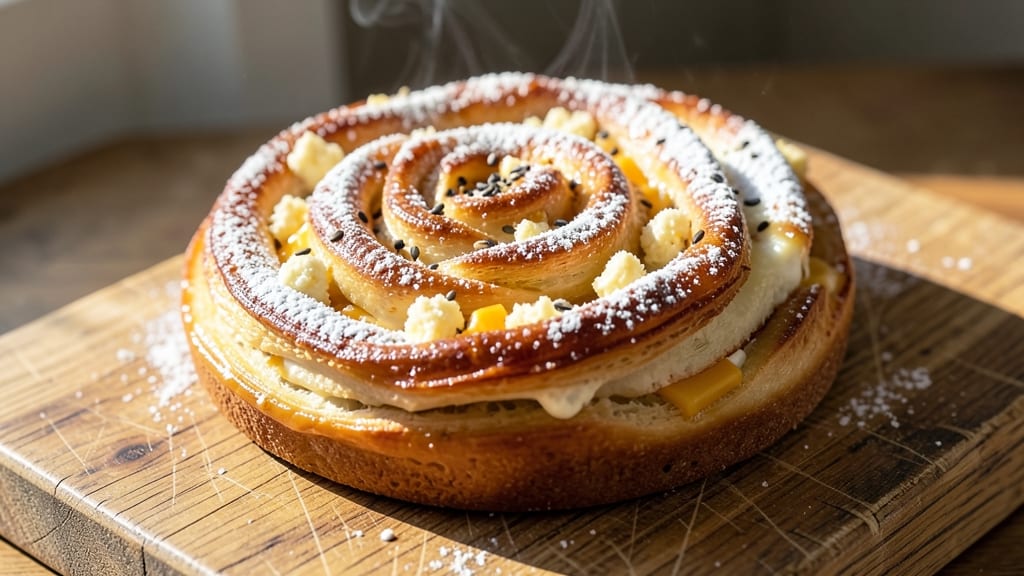
This cheese babka recipe delivers the perfect balance of flaky layers and sweet, creamy cheese swirls that taste like a bakery masterpiece. 💛 The secret lies in a tender yeast dough wrapped around a rich, tangy cheese filling—all baked to golden perfection in one pan.
I’ve refined this recipe over years to ensure the layers stay buttery and the cheese filling remains gooey, never dry.
The process starts with activating yeast for a light, airy dough, then mixing in cream cheese for that signature tang. After shaping the dough into a braided loaf around the filling, the real magic happens in the oven—425°F heat creates those signature flaky layers while keeping the center moist.
No special tools required, just patience and a steady hand for shaping.
What you’ll end up with is a showstopping babka with crisp edges, tender layers, and a cheese filling so rich it practically melts in your mouth. The aroma alone will have everyone gathering around the kitchen, and the first bite delivers that perfect harmony of sweetness and tang.
This is the kind of dessert that makes you look like a baking pro.
Serve warm with powdered sugar dusted on top or a light glaze for extra shine. Perfect for brunch, holidays, or when you want to impress without spending hours in the kitchen. Let’s get baking!
Ingredients for cheese babka
Eight ingredients transform into a bakery-worthy babka with flaky layers and gooey cheese swirls.
| Ingredient | Amount | Notes |
|---|---|---|
| All-Purpose Flour 🌾 | 4 cups | Sifted for light texture |
| Granulated Sugar 🍚 | ½ cup | Superfine preferred for smoothness |
| Active Dry Yeast 🍞 | ¼ oz | 1 packet, room temperature |
| Whole Milk 🥛 | 1 cup | Warm, 110°F for yeast |
| Large Eggs 🥚 | 2 whole | Room temperature, separated |
| Unsalted Butter 🧈 | 1 cup | Cold, cubed for dough |
| Salt 🧂 | ½ tsp | Fine sea salt preferred |
| Vanilla Extract 🌸 | 1 tbsp | Pure vanilla for flavor |
| Cream Cheese 🧀 | 8 oz | Full-fat, room temperature |
| Powdered Sugar 🍚 | ½ cup | For filling sweetness |
| Lemon Zest 🍋 | 1 tbsp | Brightens cheese filling |
| Heavy Whipping Cream 🥛 | ½ cup | Cold for filling stability |
| Powdered Sugar 🍚 | ¼ cup | For final dusting |
The yeast and butter are your secret weapons here. King Arthur or Gold Medal flour gives the best rise, but any all-purpose works. For yeast, Saf-Instant is foolproof—no proofing needed. The butter? Plugrá or Land O’Lakes unsalted melt beautifully for those signature layers. Keep everything cold until you’re ready to shape—warm dough is harder to handle. If your kitchen’s hot, chill the dough between folds (it’s worth the extra minute).
No vanilla extract? Vanilla bean paste or even vanilla sugar works in a pinch. Cream cheese too soft? Pop it in the microwave for 10 seconds to firm up before mixing. The filling can be prepped ahead—just wrap tightly and refrigerate for up to 24 hours. Need a shortcut? Swap the heavy cream for Greek yogurt at half the amount—it’s tangier and keeps the filling rich. And if powdered sugar’s not on hand, blend granulated sugar into a fine powder (food processor works great).
This babka is best served fresh, but leftovers reheat beautifully. Wrap tightly in plastic and store at room temperature for 2 days. For longer storage, freeze the whole loaf (unbaked) for up to 3 months
Why You'll Love This Recipe
- No Yeast Nightmare: Mixing the dough takes about five minutes—just flour, sugar, yeast, milk, and eggs. No waiting for hours or complicated steps; this rises while you handle the cheese filling, so you’re basically baking two things at once.
- Sweet-Savory Magic: That tangy cream cheese swirled into buttery, slightly caramelized dough? It’s like a hug in bread form. The milk and eggs make it rich but not heavy, and the sugar keeps it just sweet enough to balance the cheese’s boldness.
- Weekend or Weeknight: Slice it fresh for brunch or bake a full loaf to reheat all week. Honestly, I’ve served it at potlucks, packed it for lunch, and even used the leftovers for French toast—because why waste that flavor?
- Budget Baking Wins: Uses pantry staples you already own, and one batch stretches for days. Between us, I’ve made this with store-brand cheese and still had people asking for seconds—proof it’s not about fancy ingredients, just good technique.
Step-by-step instructions for cheese babka recipe
Here's how to create those legendary flaky layers and rich cheese swirls—easy enough for beginners but impressive enough for company.
👨🍳 Step 1: Activate the Yeast and Create the Dough
In a small bowl, combine the 1 cup warm whole milk (110°F) with the 0.5 cup granulated sugar and 0.25 oz active dry yeast. Let it sit for 5-10 minutes until frothy—this tells you the yeast is alive and ready to work its magic.
In a stand mixer fitted with the dough hook attachment, combine the 4 cups sifted all-purpose flour, 0.5 tsp salt, and the yeast mixture. Mix on low speed for 1 minute until combined. Add the 2 whole large eggs and 1 tbsp vanilla extract, mixing until the dough comes together. The dough should be shaggy but pull away from the sides of the bowl.
Add ½ cup (about 1 stick) of the cold cubed unsalted butter and mix on low speed until incorporated. The dough will be sticky but manageable. Knead for 5-7 minutes until smooth and elastic, scraping down the sides as needed. The dough should be soft but not sticky to the touch—if it is, add 1 tablespoon flour at a time until it pulls away cleanly.
🍳 Step 2: Prepare the Cheese Filling and Let Dough Rise
While the dough rises, make the filling by beating the 8 oz room-temperature cream cheese with the 0.5 cup powdered sugar and 1 tbsp lemon zest until completely smooth. In a separate bowl, whip the 0.5 cup cold heavy whipping cream to soft peaks, then gently fold it into the cream cheese mixture. Cover and chill until ready to use.
Shape the dough into a rectangle on a lightly floured surface, about 12x16 inches. Roll it out to ¼-inch thickness, then spread the cream cheese filling evenly over the surface, leaving a ½-inch border around the edges. Roll the dough tightly into a log, pinching the seam to seal. Place the log seam-side down in a greased 9x13-inch baking pan.
Cover the pan with a damp towel and let the dough rise in a warm place for 1-1.5 hours, or until it has nearly doubled in size. The dough should look puffy and slightly domed—this is your cue that it's ready for the final shaping.
🔥 Step 3: Shape and Bake for Maximum Flakiness
Preheat your oven to 350°F. Using a sharp serrated knife, slice the risen babka log into 1-inch thick slices, rotating the pan as you go to ensure even cuts. Stack the slices back into the pan, slightly overlapping them to create a layered effect.
Bake for 35-40 minutes until the top is golden brown and the internal temperature reaches 190°F. The babka should pull away slightly from the edges of the pan, and it should smell like warm vanilla and butter. If the top browns too quickly, tent loosely with foil to prevent over-browning.
Remove from the oven and let cool in the pan for 10 minutes. Dust generously with the 0.25 cup powdered sugar while still warm for that classic babka finish. Serve warm with a dusting of powdered sugar and a cup of coffee—every slice should reveal those beautiful flaky layers and creamy cheese swirls.
Pro Tips For Making Cheese Babka
- Test Yeast First: Skip straight to mixing and you’re asking for trouble. Proof the yeast in warm milk with a pinch of sugar—it should bubble within 5-10 minutes. If it’s sluggish or dead, swap it out now. I learned this the hard way when my babka turned out dense and flavorless because the yeast was past its prime.
- Scale the Sugar: Too much sugar kills the yeast, and too little makes the dough dry. For this recipe, use 2 tablespoons of sugar for the yeast proof—just enough to wake it up without overpowering. The rest goes in the dough, but measure carefully. My grandmother swore by this ratio, and her babka always rose perfectly.
- Chill the Dough Twice: Let the dough rise once, then refrigerate it overnight. This isn’t just for convenience—it develops flavor and makes folding the cheese easier. When you pull it out cold, the butter stays firm and the layers stay sharp. I was skeptical until I tried it, and now I never skip it.
- Use Cold Butter: Cut the cold butter into the dough in small pieces—no bigger than a dime. This keeps the layers distinct and prevents the babka from turning greasy. If the butter melts too soon, pop the dough back in the fridge for 10 minutes. Sounds weird, but it works: your babka will have those clean, flaky layers you crave.
Troubleshooting great cheese babka
Dough Too Sticky
If your dough feels more like glue than a workable mass, it’s likely too warm or needs more flour. I’ve found that chilling the dough for 15-20 minutes between folds helps—this firms up the butter and tightens the gluten.
If it’s still too sticky, add 1 tablespoon flour at a time until it pulls away cleanly from your fingers. Overworking it will make it tough, so keep kneading gentle. 💡
Filling Too Runny
A watery filling means your cream cheese was too soft or the heavy cream wasn’t whipped enough. To fix this, ensure your cream cheese is room temperature but not melted—press a finger into it; it should dent slightly but hold its shape.
Whip the heavy cream to stiff peaks before folding, and avoid overmixing the filling. For extra stability, add 1 teaspoon cornstarch to the powdered sugar in the filling. ✨
Babka Not Rising
Yeast that doesn’t activate or a cold kitchen can leave your babka flat. First, check your yeast: it should foam within 5-10 minutes in warm milk. If not, your yeast is dead—replace it with Saf-Instant yeast, which is more reliable.
Place your dough in a warm oven with the light on (or a proofing box) to create a consistent 80°F environment. Avoid drafts, and don’t rush the rise—it should take 1-1.5 hours to nearly double.
Layers Collapsing
If your babka loses its structure, the dough may have been overworked or the filling was too heavy. When rolling out the dough, keep it ¼-inch thick and handle it gently to avoid tearing.
Seal the seam tightly when rolling into a log, and don’t slice too thinly—1-inch slices hold their shape better. Bake at 350°F until the internal temp hits 190°F; underbaking can cause collapse. 🔥
Dry or Crumbly Texture
Overbaking or using too much flour are the usual culprits. Pull the babka out when the edges are golden but the center still looks slightly underdone—it’ll firm up as it cools.
If the dough felt dry during shaping, brush the top with 1 tablespoon melted butter before baking for extra moisture. For extra richness, replace ¼ cup of the flour with cornmeal—it adds tenderness without drying out the texture.
Cheese Filling Not Creamy
A grainy or separated filling usually means the cream cheese wasn’t smooth enough or the cream was overwhipped. Beat the cream cheese until completely creamy, then fold in the whipped cream gently to avoid deflating it. For a silkier texture, strain the filling through a fine-mesh sieve before spreading.
If it’s still too thick, add 1 teaspoon heavy cream to loosen it. Chilling the filling for 30 minutes before using also helps it hold its shape.
Nutrition facts
Frequently asked questions
Can I make this cheese babka without a stand mixer?
The dough can be mixed by hand in a large bowl using a wooden spoon or dough whisk. After combining the wet and dry ingredients, turn it out onto a floured surface and knead for 8-10 minutes by hand until smooth and elastic. Just be prepared for slightly more effort—your arms will thank you for the workout!
What's the best way to store leftover babka?
For short-term storage, keep it wrapped tightly in plastic at room temperature for up to 2 days. For longer storage, freeze the whole loaf (unbaked) for up to 3 months—thaw overnight in the fridge before baking. If you've already baked it, slice and freeze individual portions for 1 month. Reheat slices in a 350°F oven for 5-7 minutes to restore freshness.
Can I substitute cream cheese with another type of cheese?
While cream cheese gives the signature tangy richness, you can use ricotta or mascarpone for a similar texture. For a sharper flavor, try goat cheese (reduce by ¼ cup and add 2 tbsp sour cream to balance). Avoid pre-shredded cheeses—they contain anti-caking agents that make the filling grainy. Always bring your substitute to room temperature first.
Why does my babka turn out dense instead of flaky?
Dense babka usually means the dough was overworked or the butter wasn't cold enough. Keep kneading gentle and use cold cubed butter (not melted). Another common issue is overbaking—pull it out when the edges are golden but the center still jiggles slightly. For extra flakiness, fold the dough 3 times (like letter folding) before shaping instead of just once.
Can I make this babka in a different pan shape?
Yes! While the recipe uses a 9x13-inch pan, you can adapt it to a 9-inch round pan or even a loaf pan. For round pans, slice the log into ½-inch thick slices and arrange them in concentric circles. In loaf pans, slice into 1-inch thick slices and stack vertically. Just adjust baking time—smaller pans may need 10-15 minutes less time.